



AXIOM
Work With Us
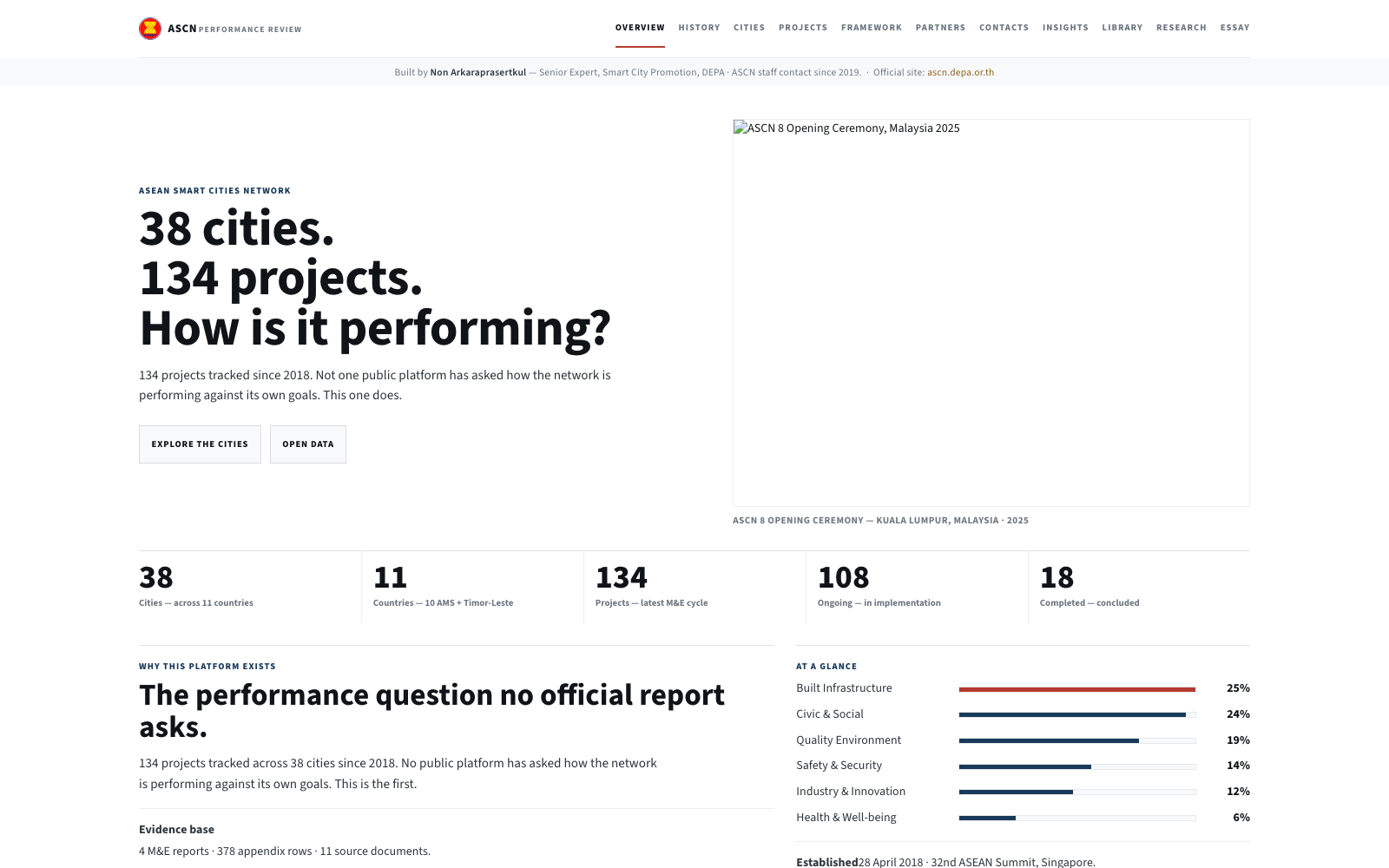
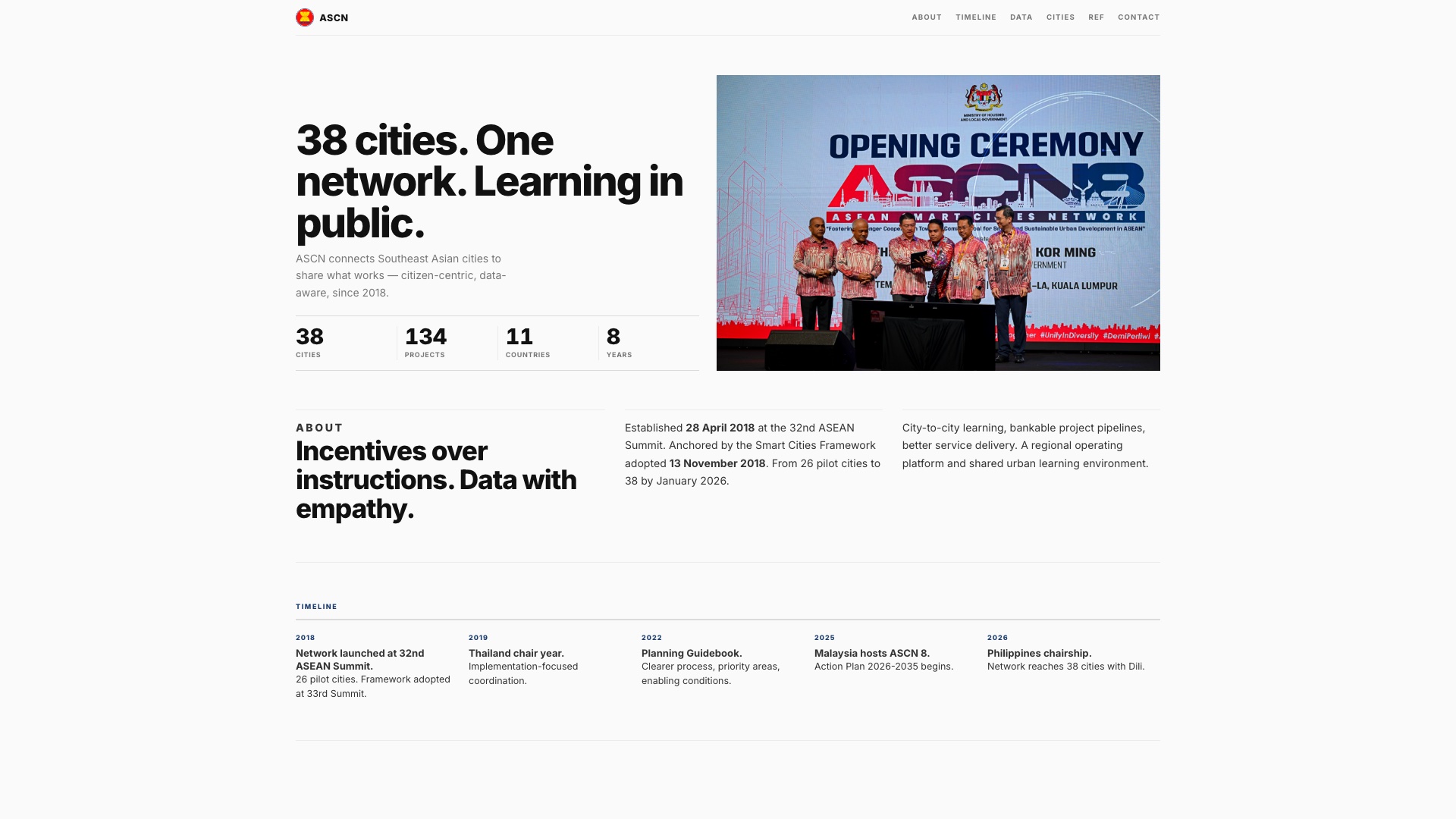
24/7 monitoring 157 SLIC Index cities 174 Smart City Thailand Index cities Kuching, Malaysia Middle East Asia Pacific ASEAN

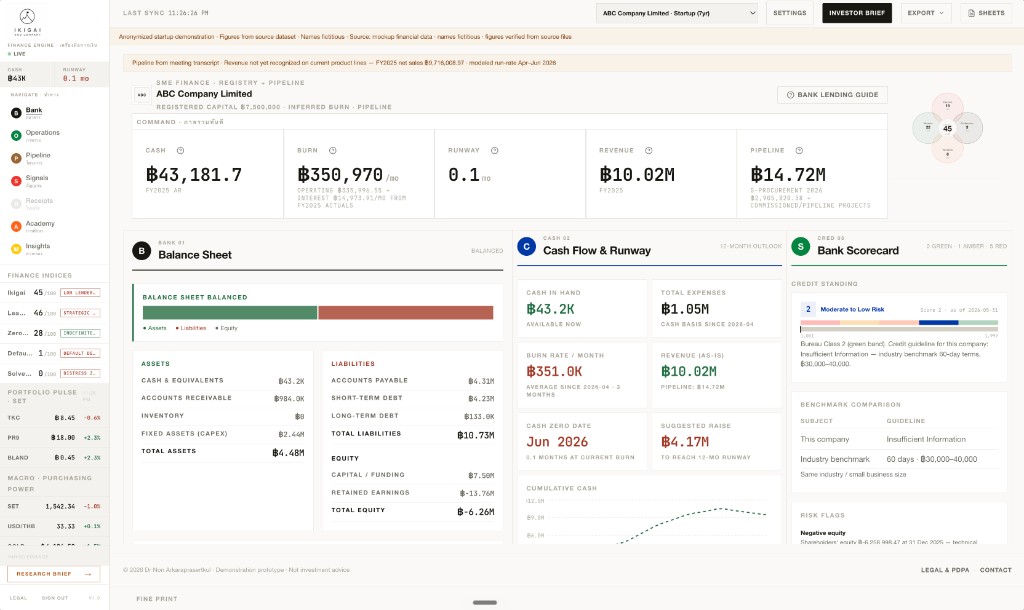
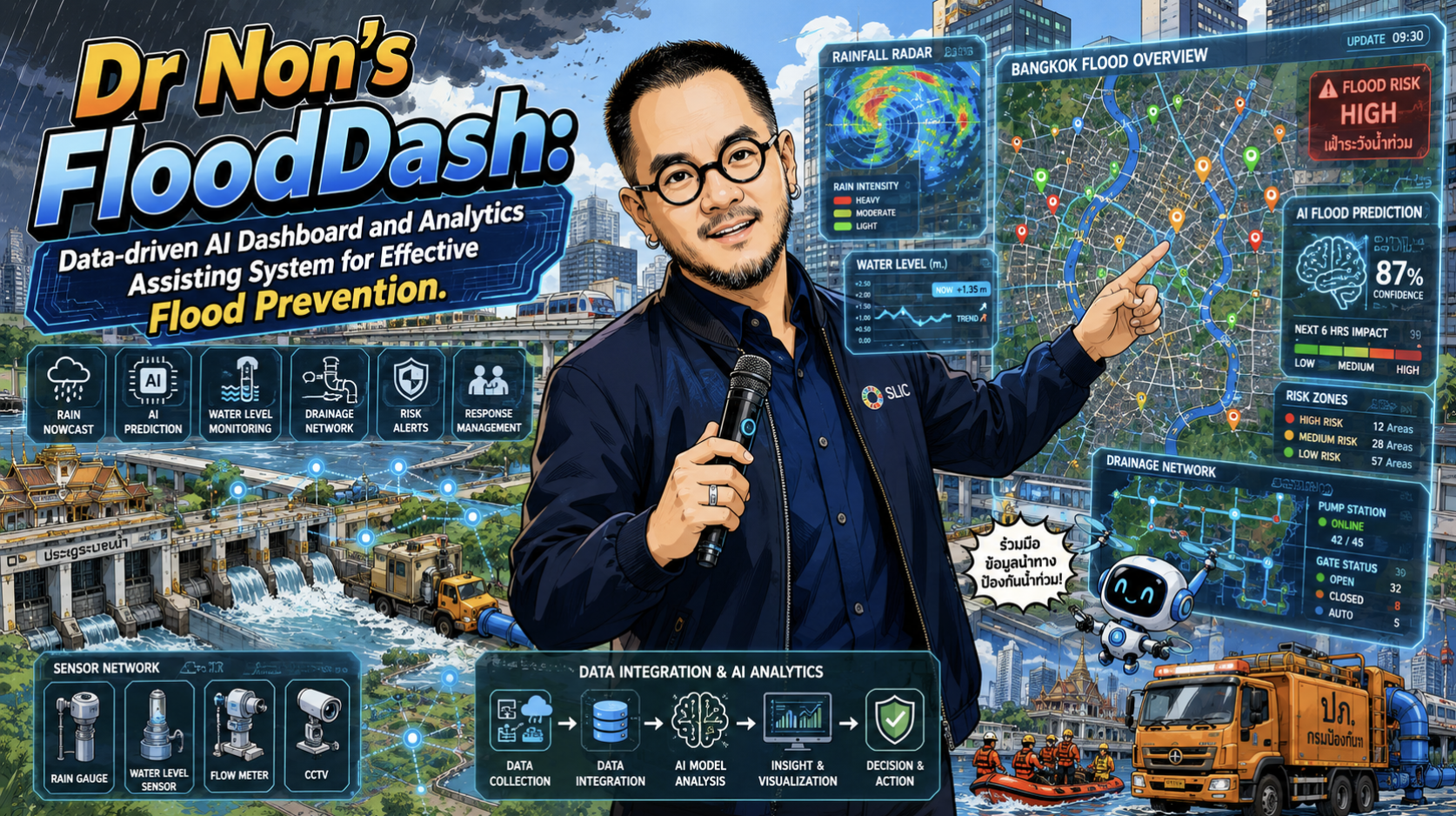
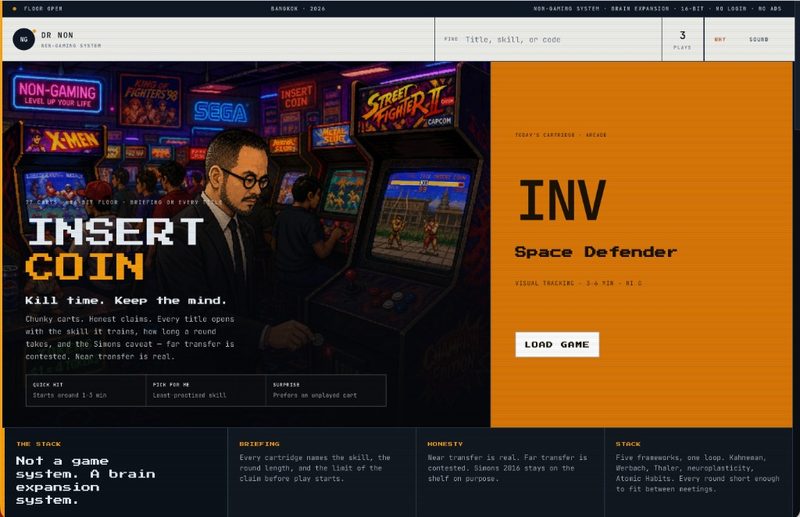
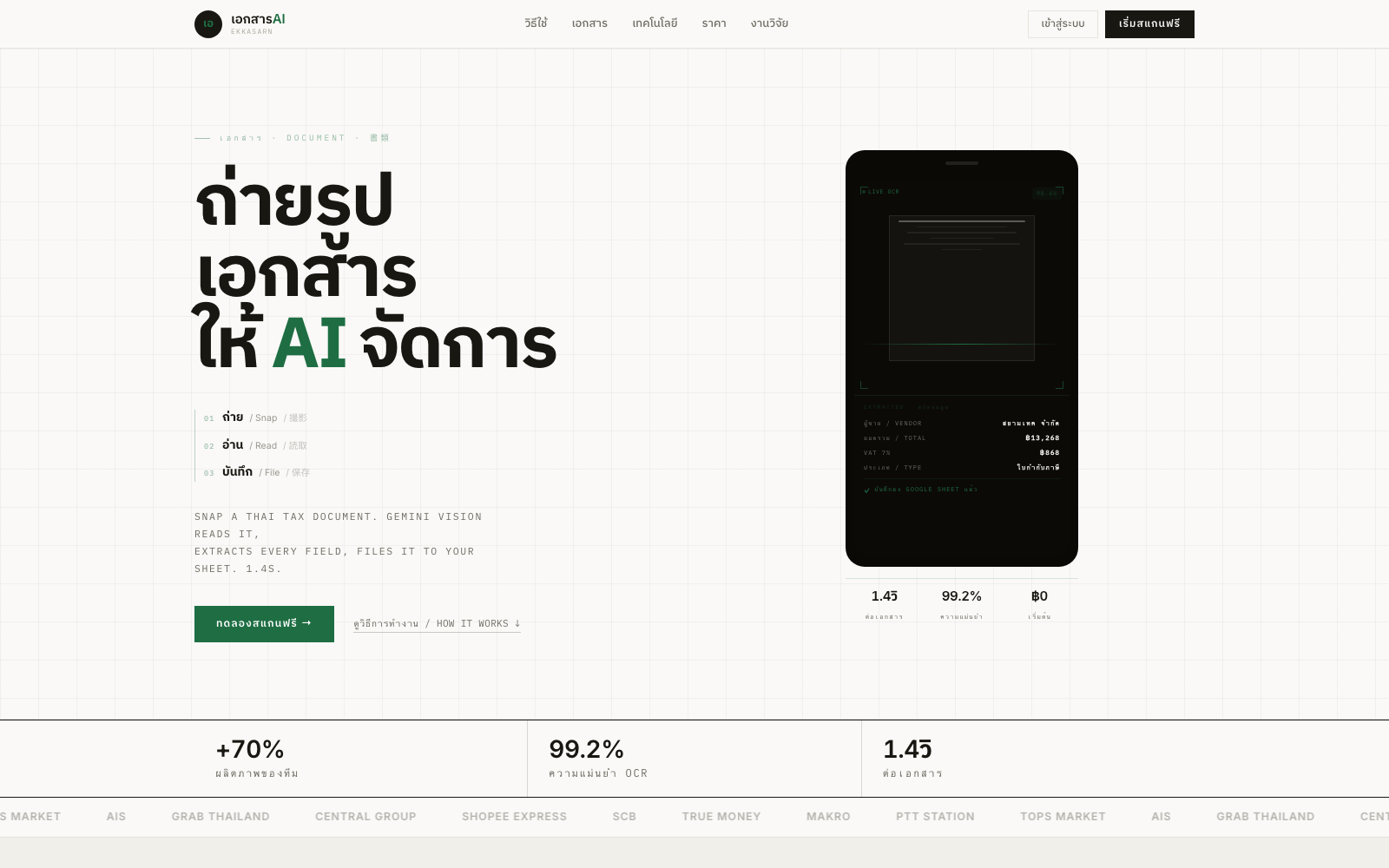
We build the working systems governments
can't afford to wait for.

Most "smart city" work ends as a deck. Ours runs in production. Problem mapped in week one. Something working before any presentation. Every decision tracked from the start.

0 Systems in production
0 Countries operating
0 Cities indexed
0+ On main stage, GITEX Asia
Live in production

Real systems. Real cities. Operating today.

Each one started as a sharp question, shipped as a working surface, and stays useful long after the launch press cycle ends. Click through and use them — they're live.

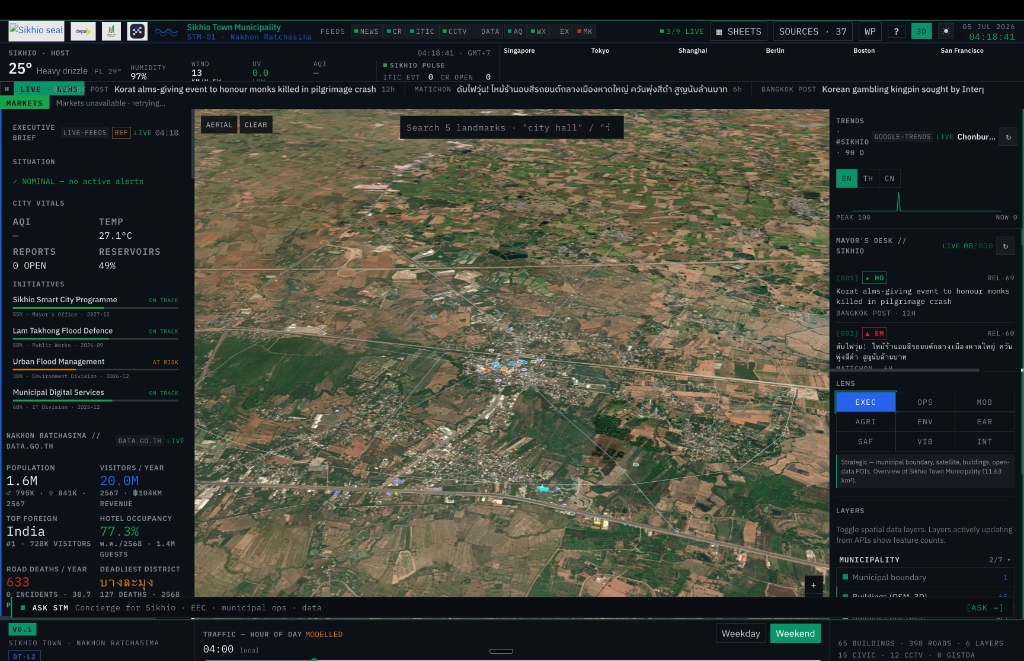
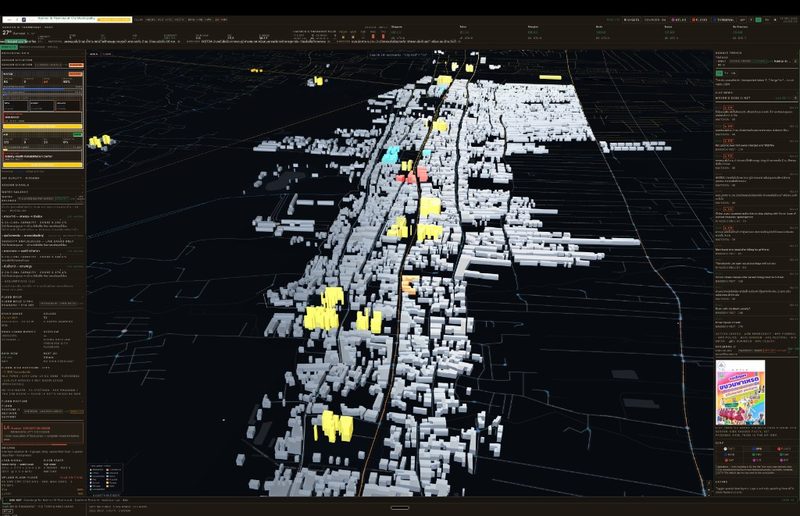
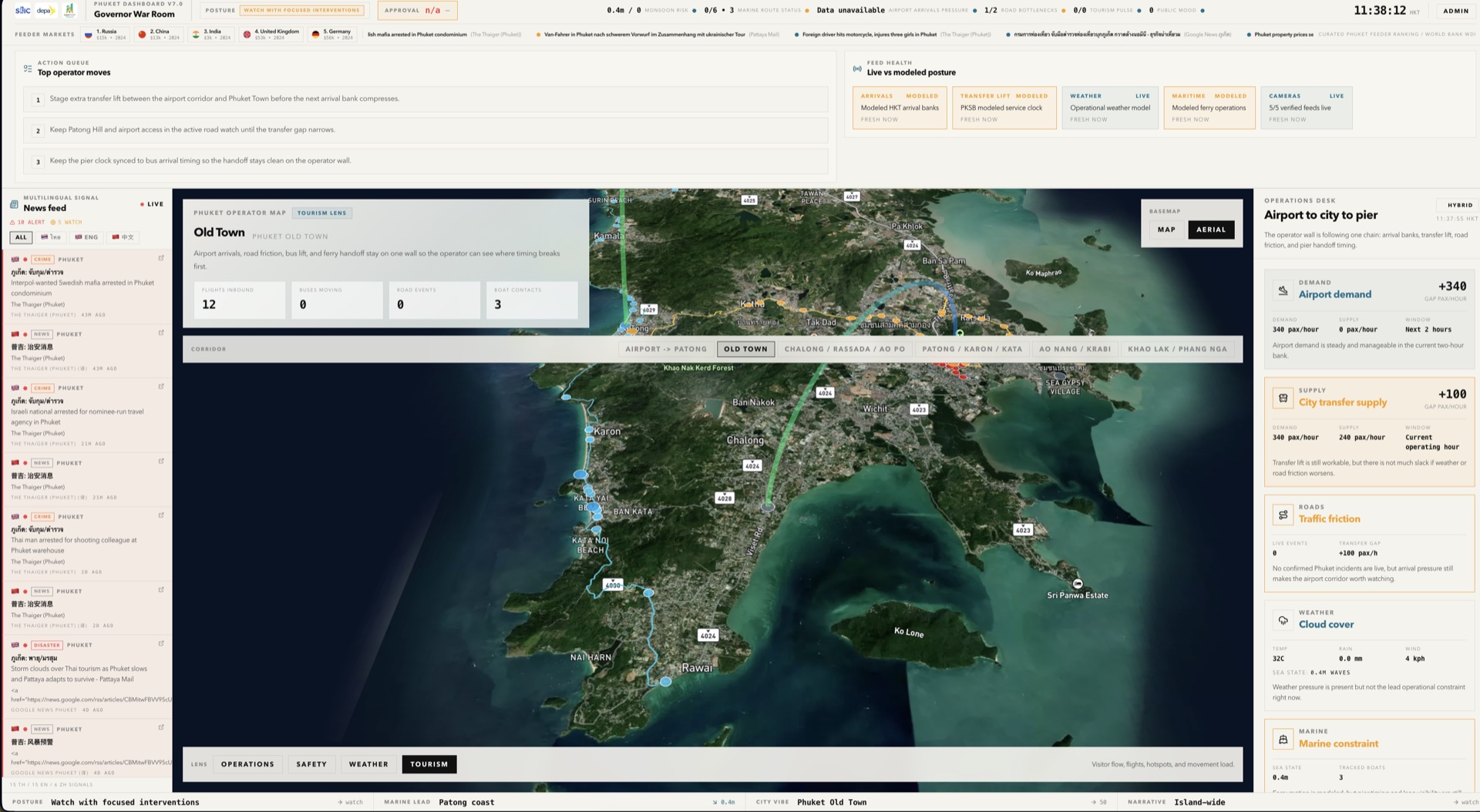
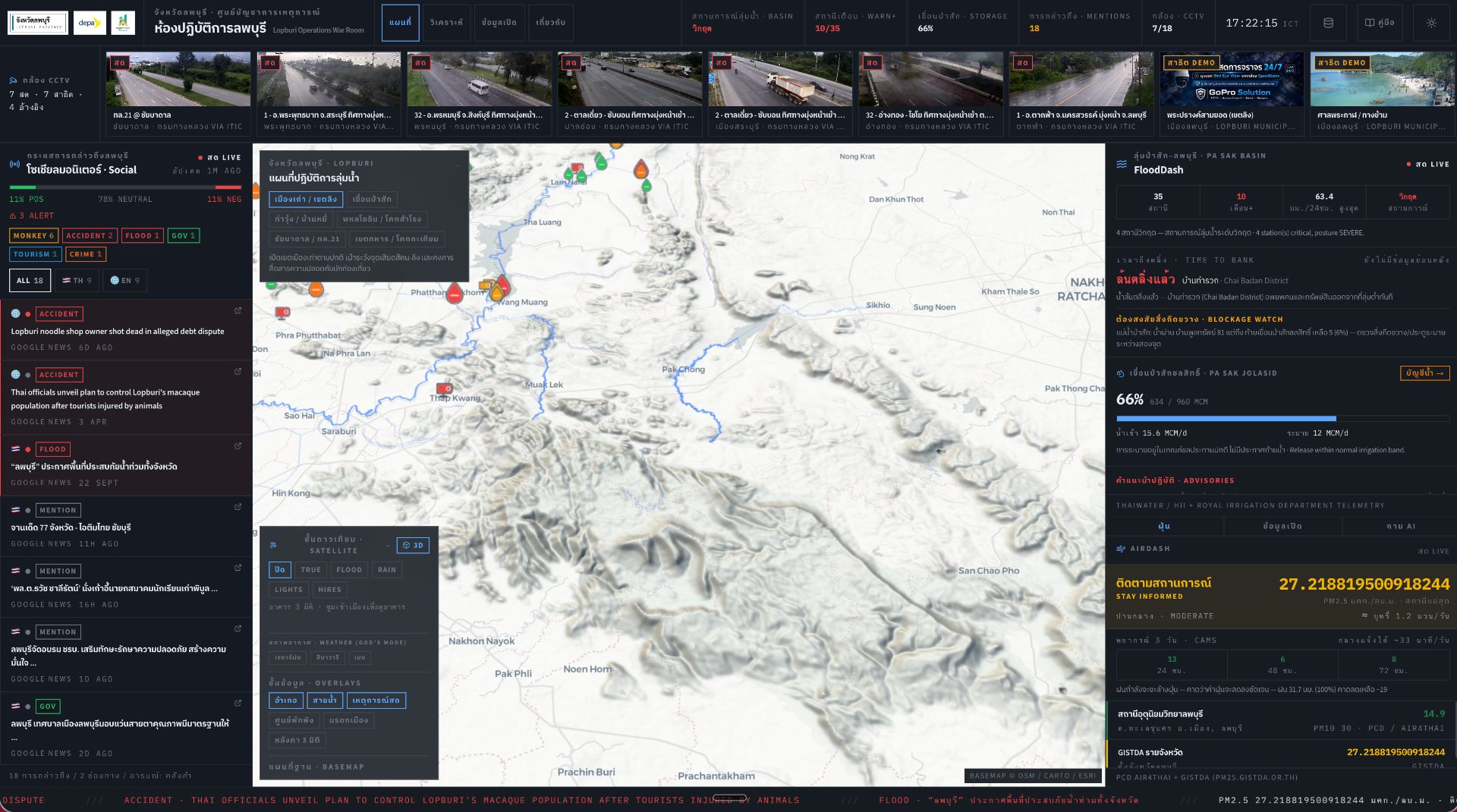
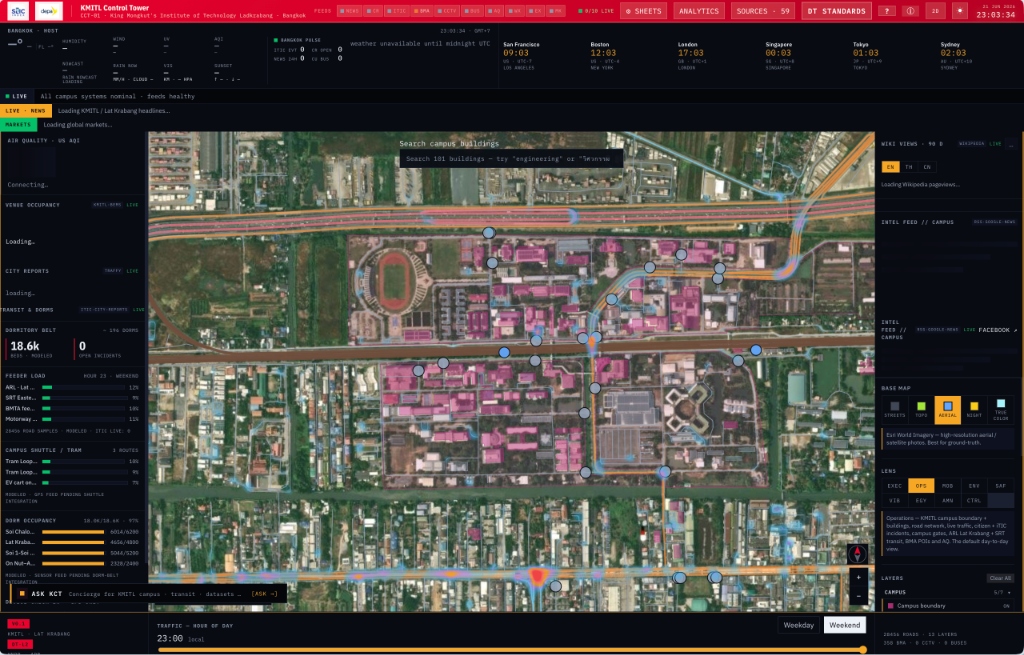
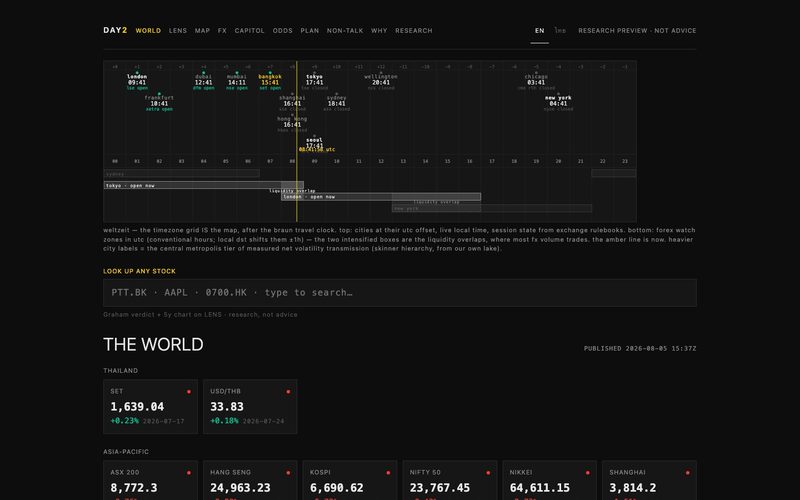
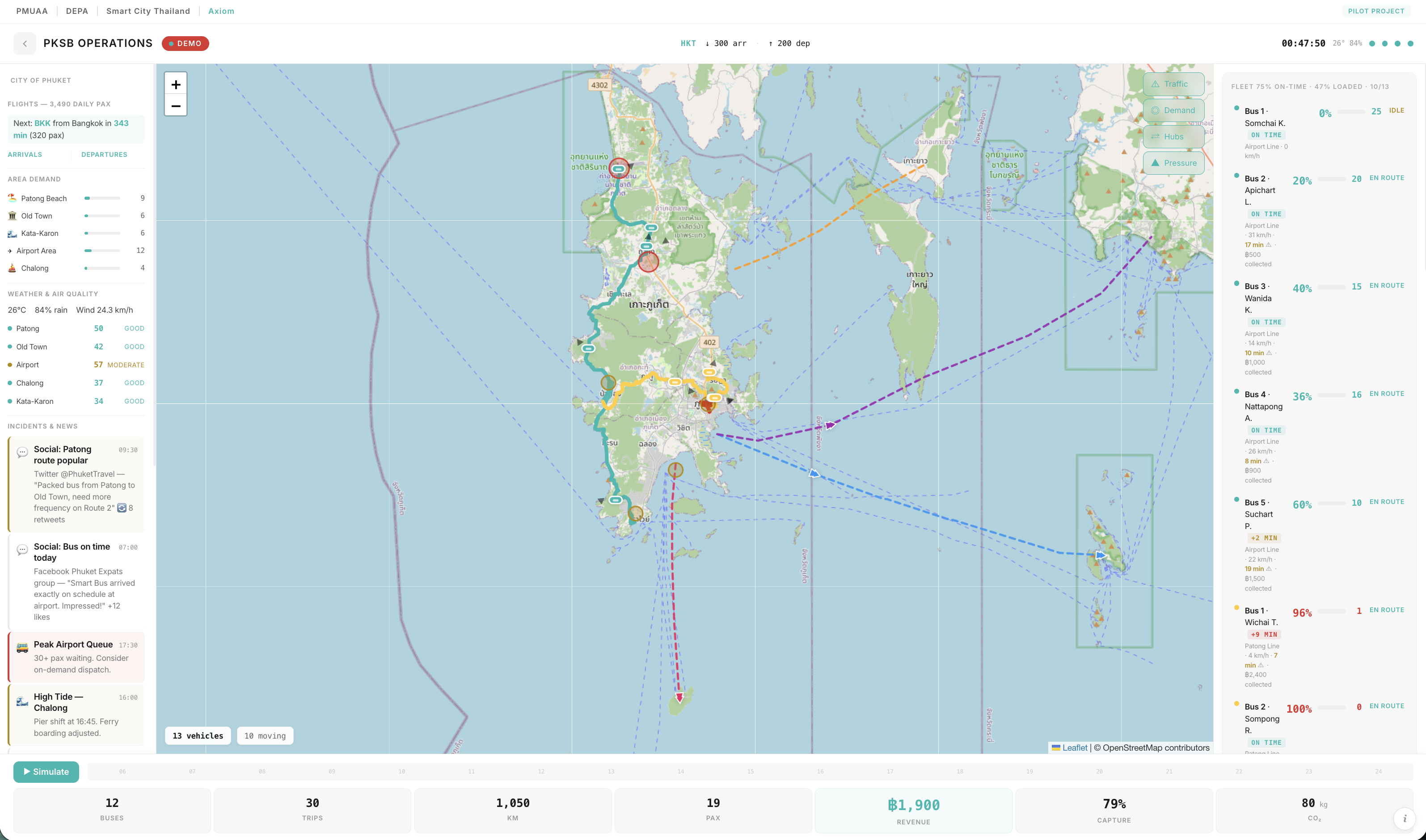
Live · Phuket NODE_01 7.8804°N · 98.3923°E Phuket Dashboard — governor-grade operations room interface
PROD / 01 / Regional Operations

A governor's situation room, in a browser tab.

Phuket's transit, public safety, and environmental signals, unified into one surface that an actual governor can read in 30 seconds. Built in weeks, not procurement cycles.

Latency42ms
Sensors3,200
StatusNominal
StackVite · Mapbox · IoT
Why it's special Most government dashboards are read-only PDFs disguised as software. Phuket is a working operations room: transit, safety, and environment fused on one screen, refreshed every 42ms. The governor reads it directly — no analyst translation layer.
What it replaced Three siloed agency reports, an SMS escalation chain, and a Tuesday-morning briefing slot.
Earned on day one Built on existing IoT infrastructure — no new hardware procurement.
System architecture // NODE_01 · Phuket Operations
Inputs
IoT Sensors × 3,200
Transit GPS Feeds
Safety Alert Network
Environmental Monitor
Processing
Edge Aggregation
42ms refresh
Vite · Mapbox · IoT
Surfaces
Governor Dashboard
War Room View
Smart Bus App
Passenger Telemetry
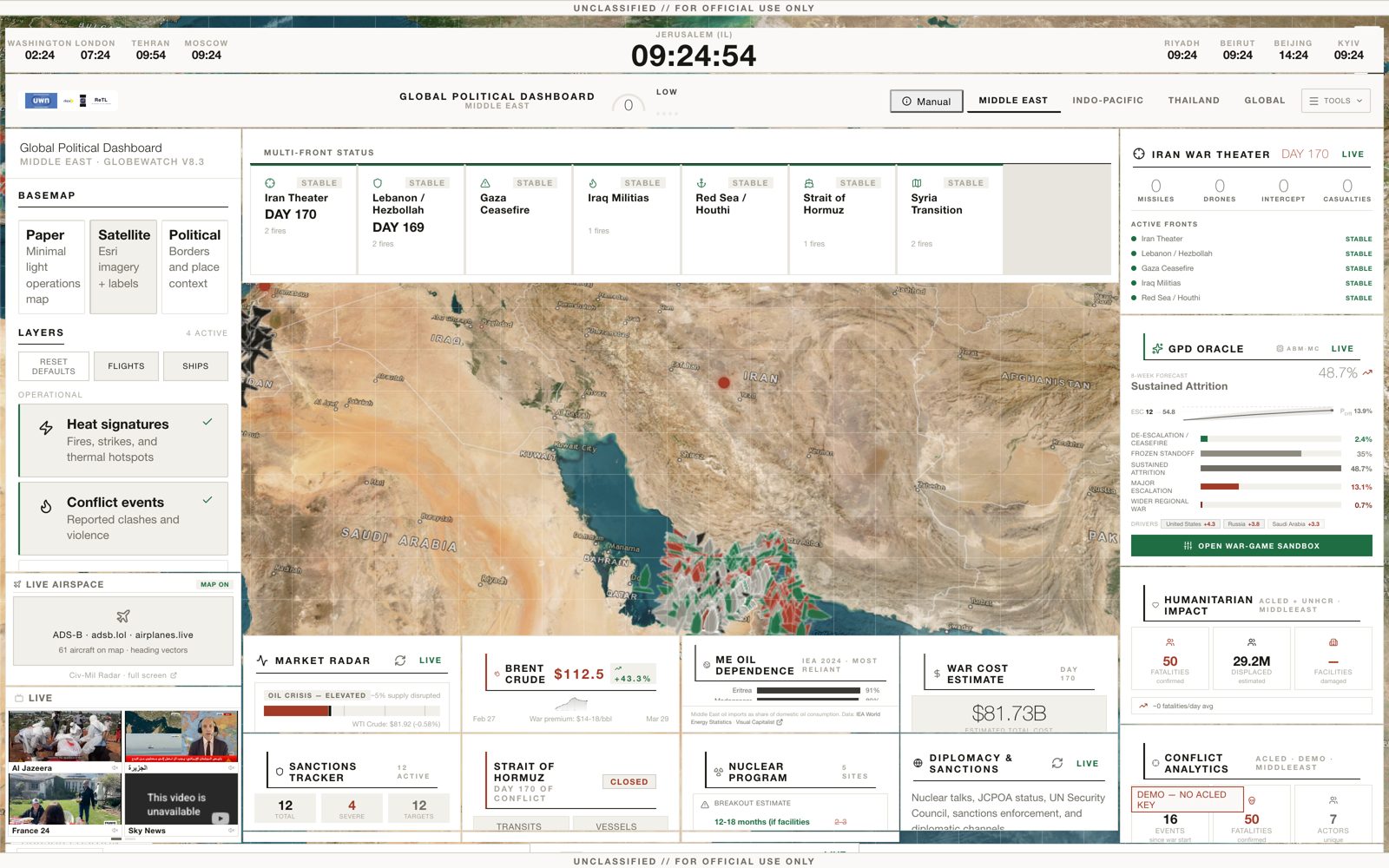
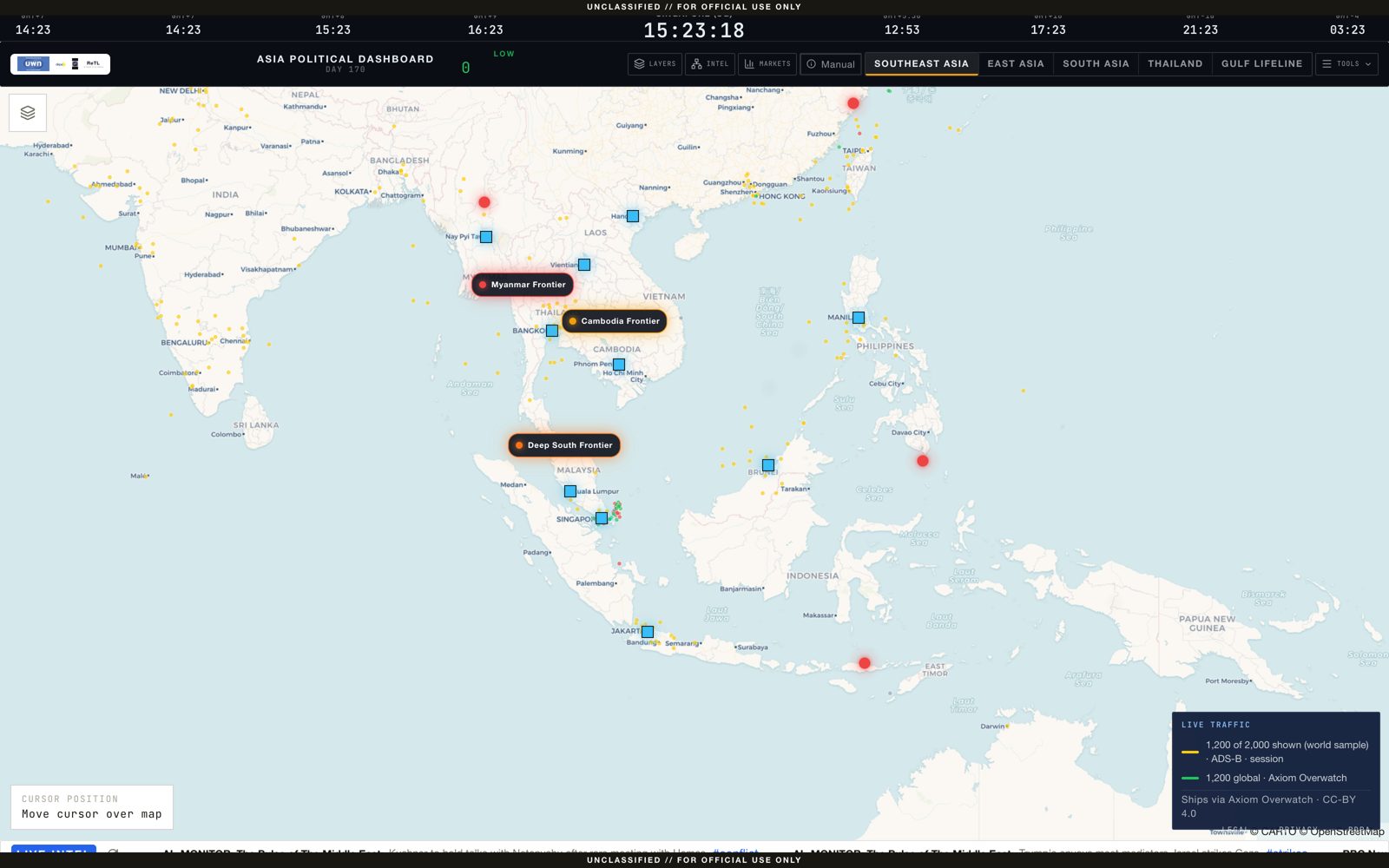
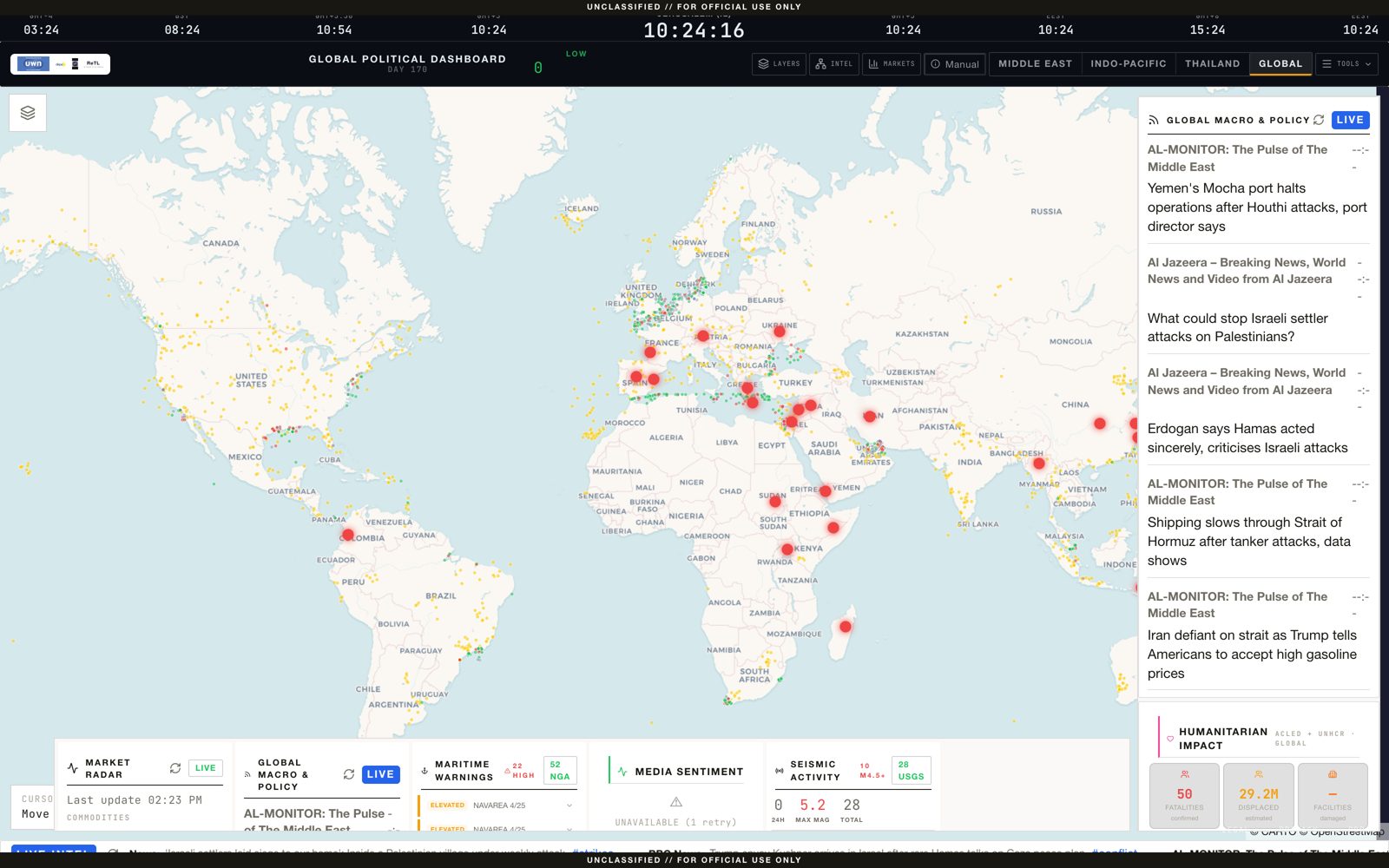
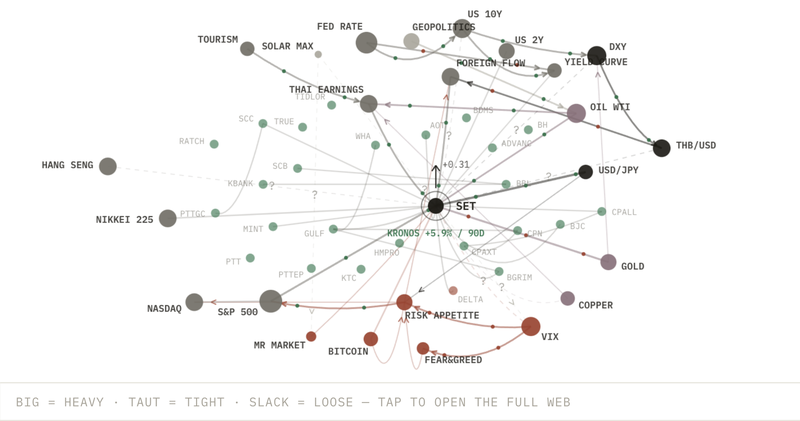
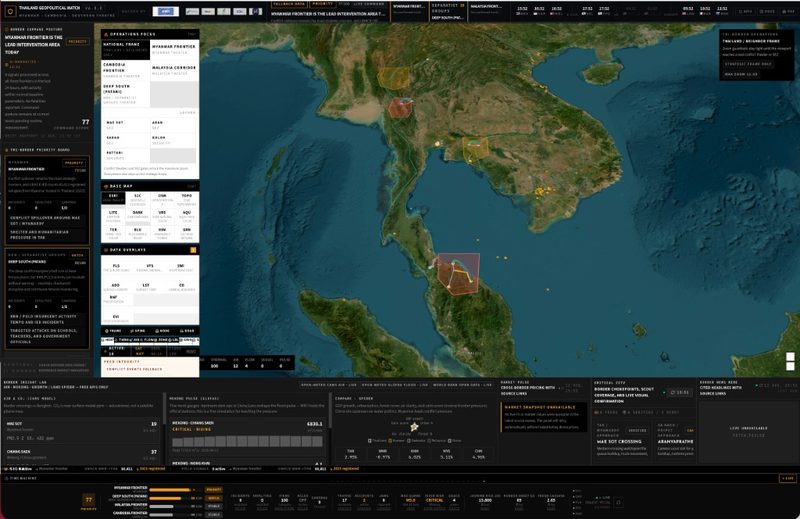
Live · Global NODE_02 12+ feeds · 53 nations DNGWS Global Monitor — real-time geopolitical intelligence dashboard
PROD / 02 / Strategic Intelligence

Macro signal, before the room starts guessing.

DNGWS Monitor pulls live escalation tracking, economic spillover, and cross-source crisis visualization into one surface. For decision-makers who can't wait for the briefing deck.

Sources12+
CoverageGlobal
CadenceLive
StackGIS · OSINT · Edge
Why it's special Bloomberg Terminal costs $25K/seat/year. This runs on open data. Cross-source crisis fusion, escalation deltas, and economic spillover — surfaced fast enough to brief a minister before the cable news cycle catches up.
What it replaced Subscription intelligence platforms, ad-hoc analyst PDFs, and the gap between "something happened" and "we have a position."
Earned on day one Sentinel-2 satellite imagery, OSINT feed fusion, and 53-country NLP brief layer — deployed at the edge for sub-second region switches.
System architecture // NODE_02 · DNGWS Strategic Intelligence
Inputs
OSINT Feeds × 12+
Sentinel-2 Satellite
Economic Indicators
Market Data Streams
Processing
NLP Fusion Engine
Escalation Deltas
GIS · OSINT · Edge
Surfaces
Global Monitor
Dashboard
53-country
Brief Layer
Ministerial
Alert Feed
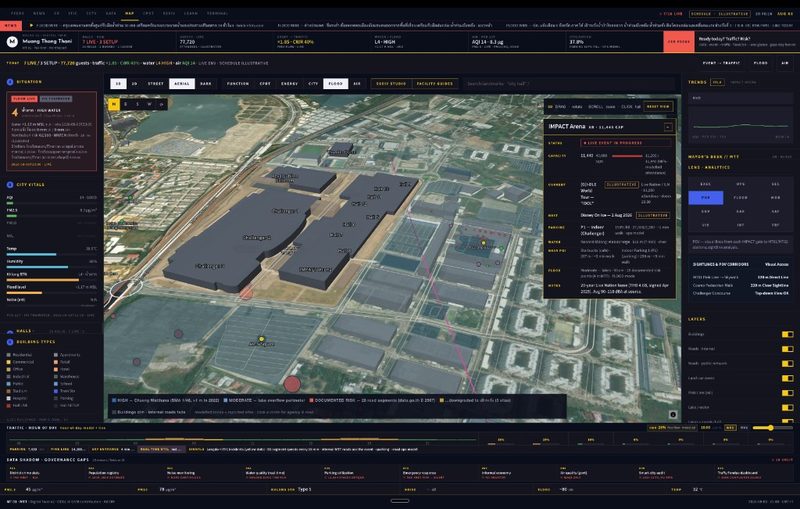
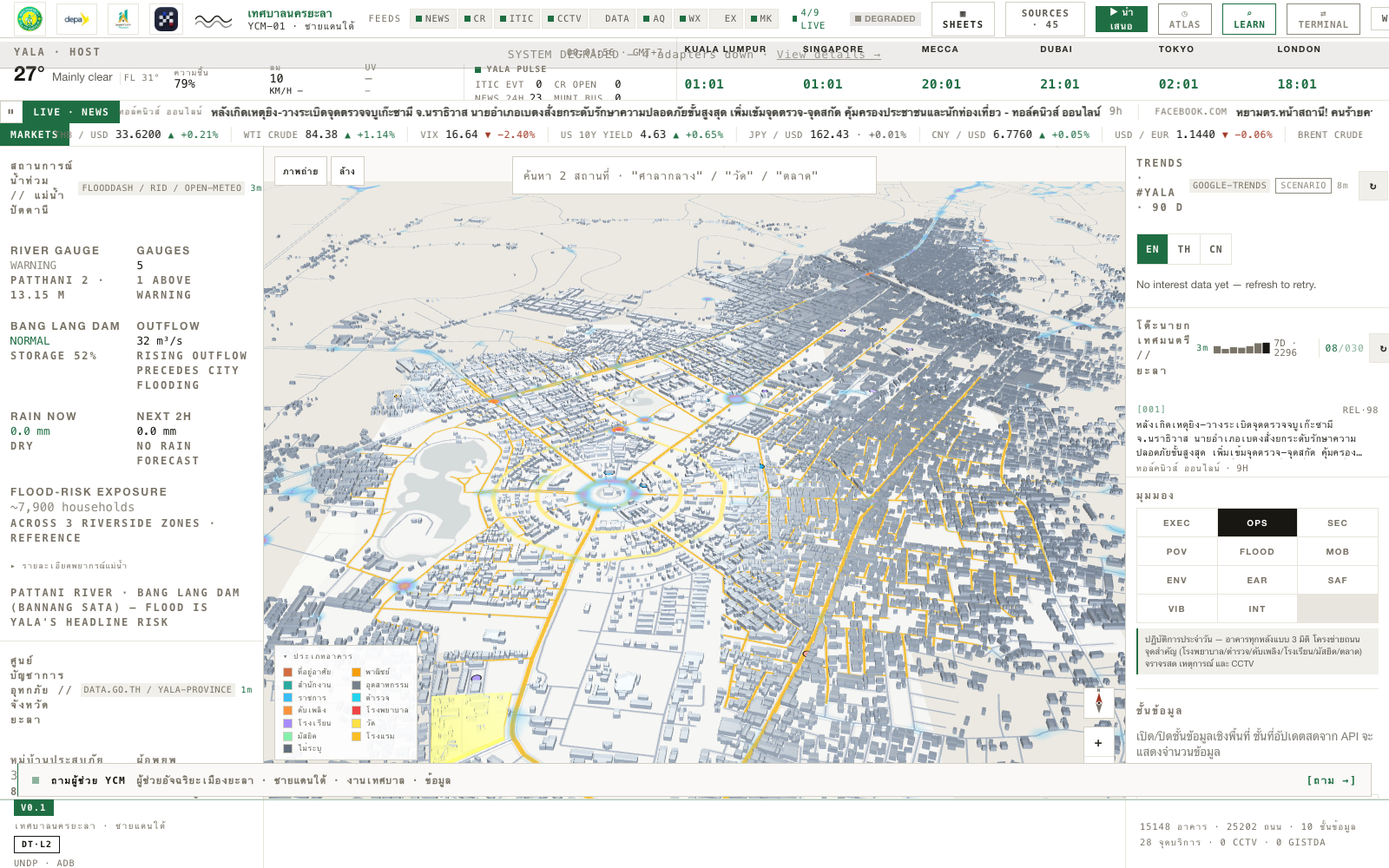
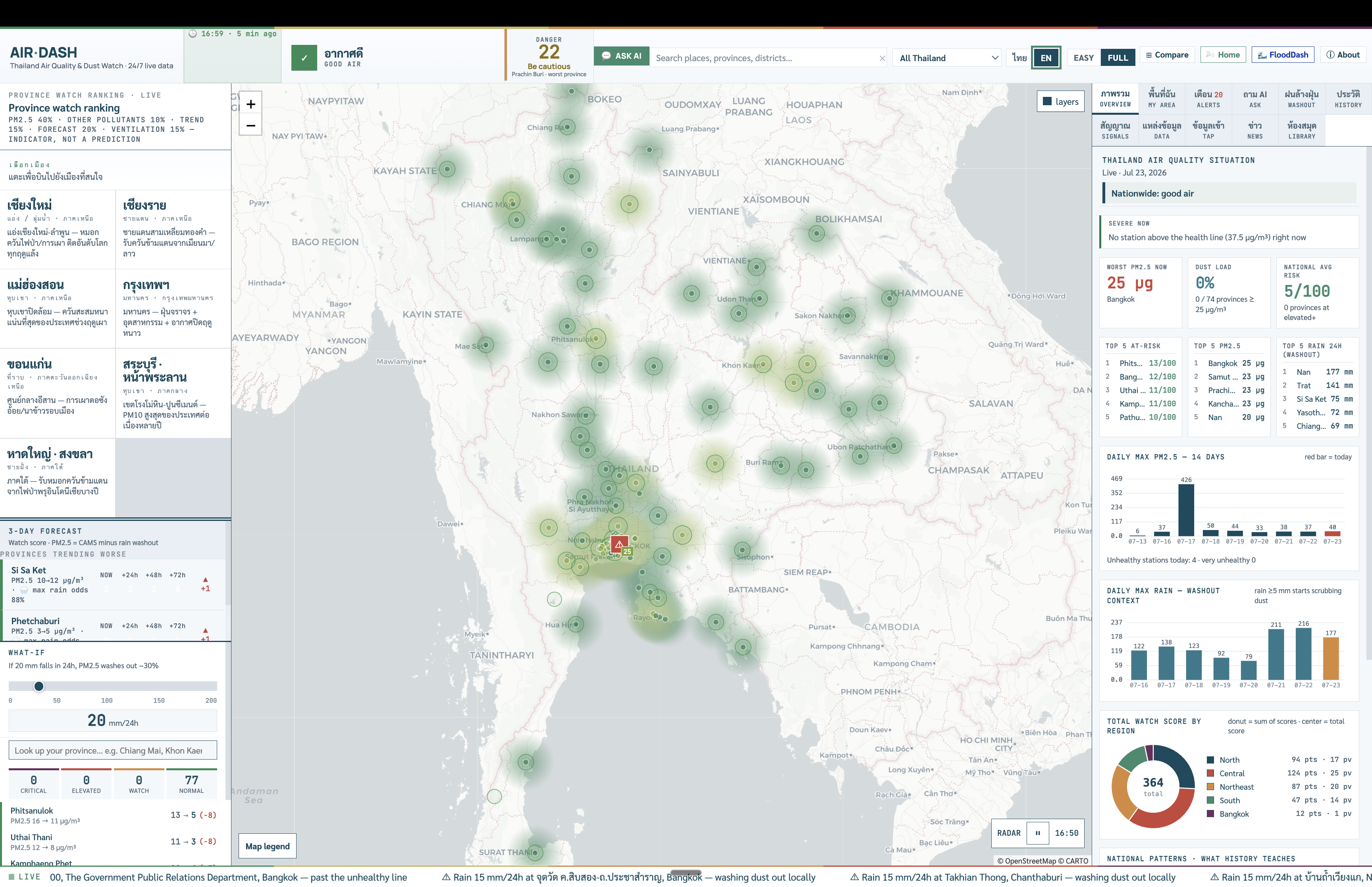
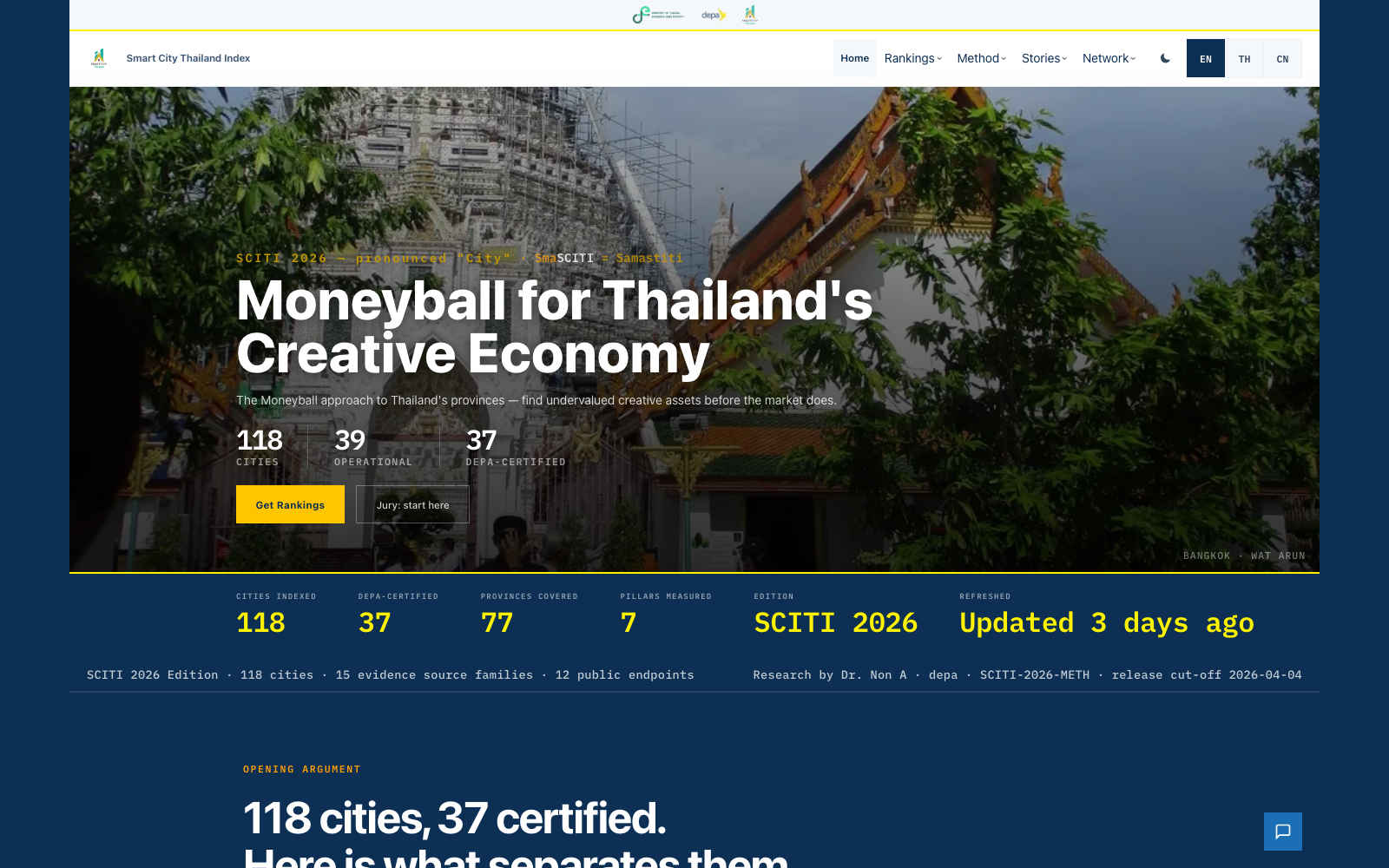
Live · National NODE_03 13.7563°N · 100.5018°E Smart City Thailand Index — national programme tracking
PROG / 03 / National Programme

Bureaucracy, made legible.

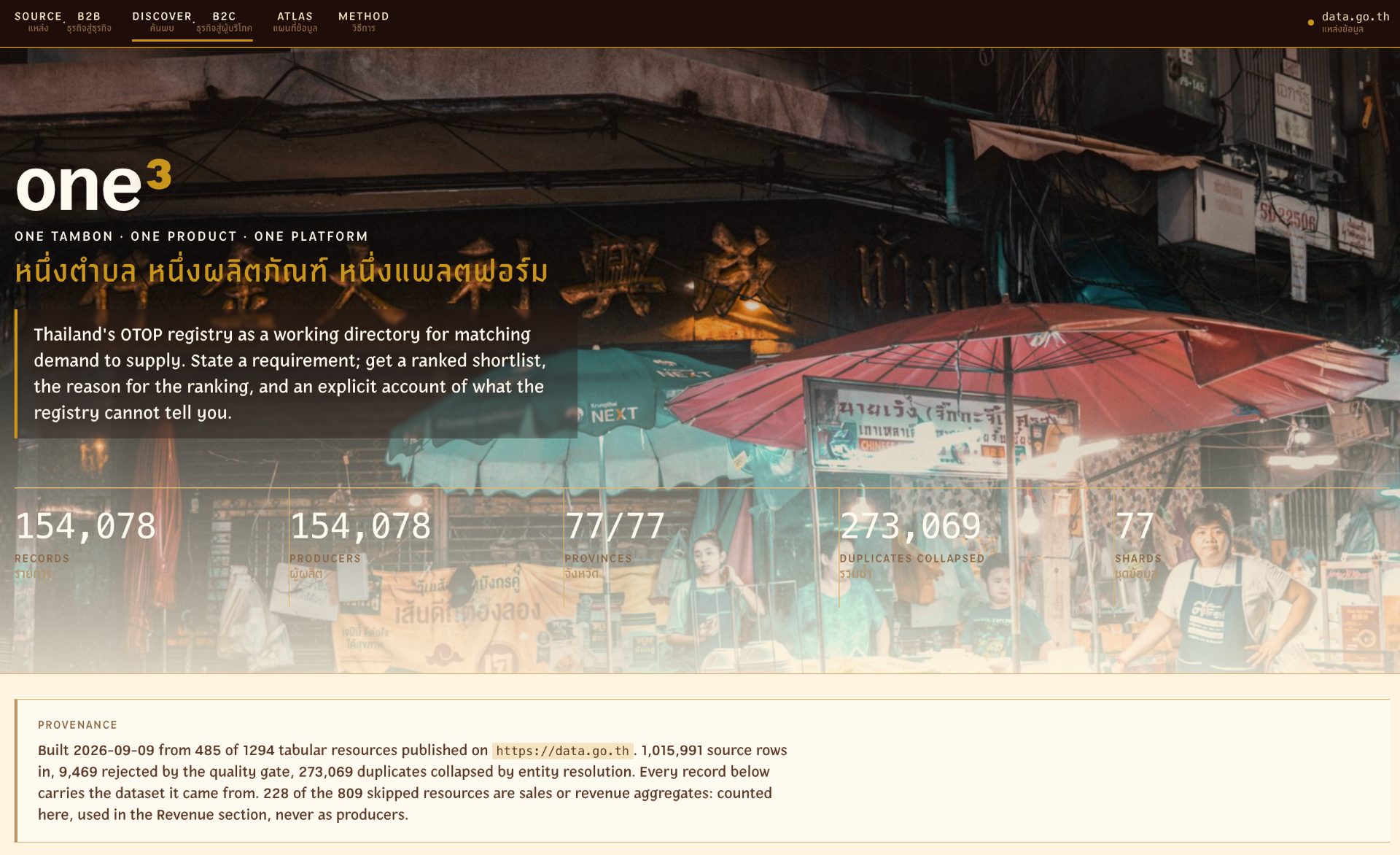
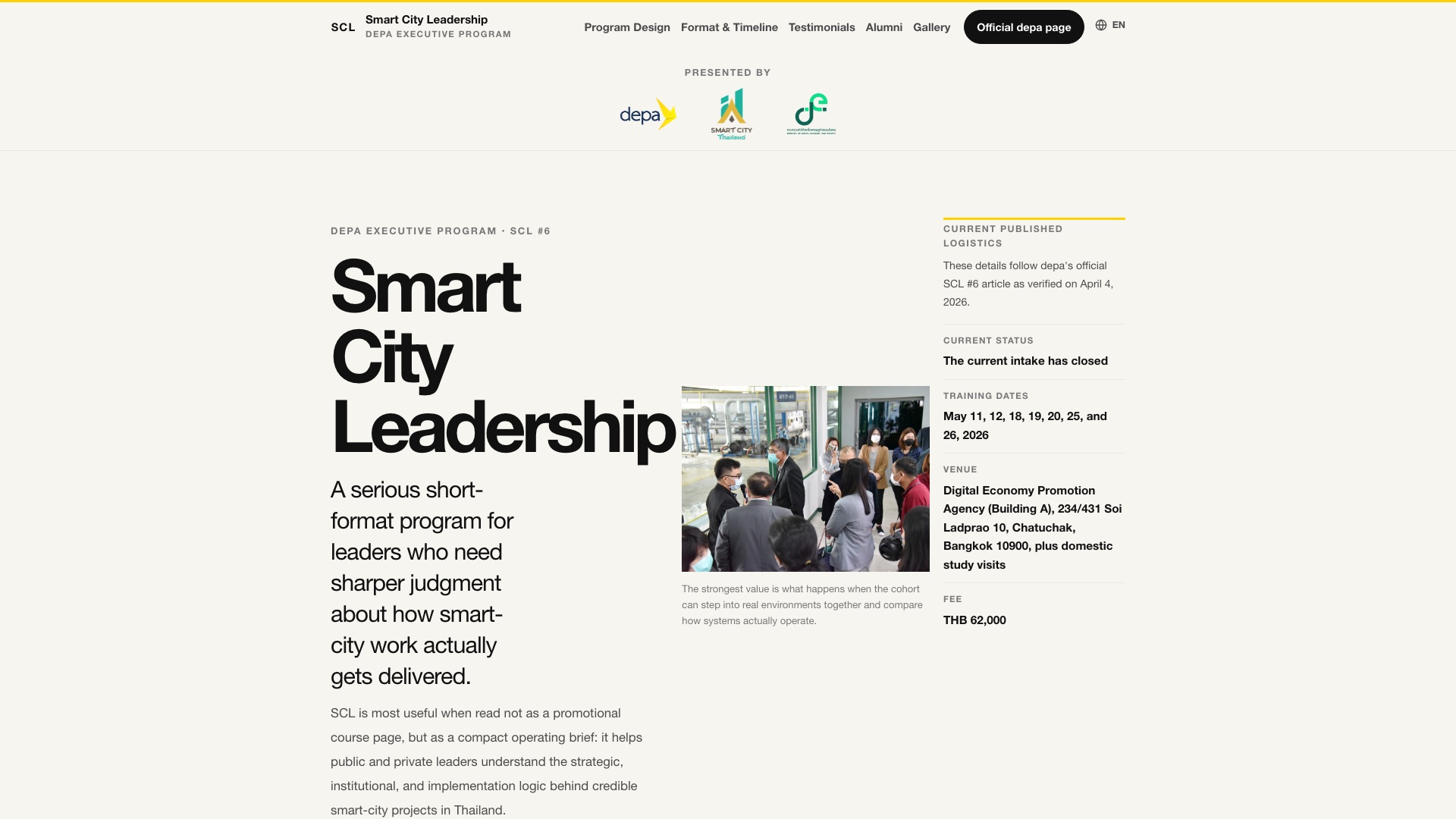
We built the public surface for Thailand's national smart city programme with depa. Proposals go in. Progress stays visible. The programme stops disappearing into PDFs.

Programmedepa
ScopeNational
TrackingLive
StackReact · Index
Why it's special National programmes usually live in annual reports nobody reads. This one is online, bilingual, and tied to outcomes — not ceremony. A candidate city's status moves the moment a milestone clears.
Who pays for it depa — Thailand's Digital Economy Promotion Agency. Direct-to-government engagement, not a sub-vendor relationship.
Why it matters Sets the template for any national smart-city programme that wants to stay legible past the launch press cycle. SLIC integrates as the benchmarking layer.
System architecture // NODE_03 · Thailand National Programme
Inputs
City Applications
(depa portal)
Milestone Reports
Programme Data
Updates
Processing
Smart City Index
Bilingual CMS
React · Index Layer
Surfaces
National Public
Dashboard
City Status
Tracker (live)
MTT Super
Dashboard
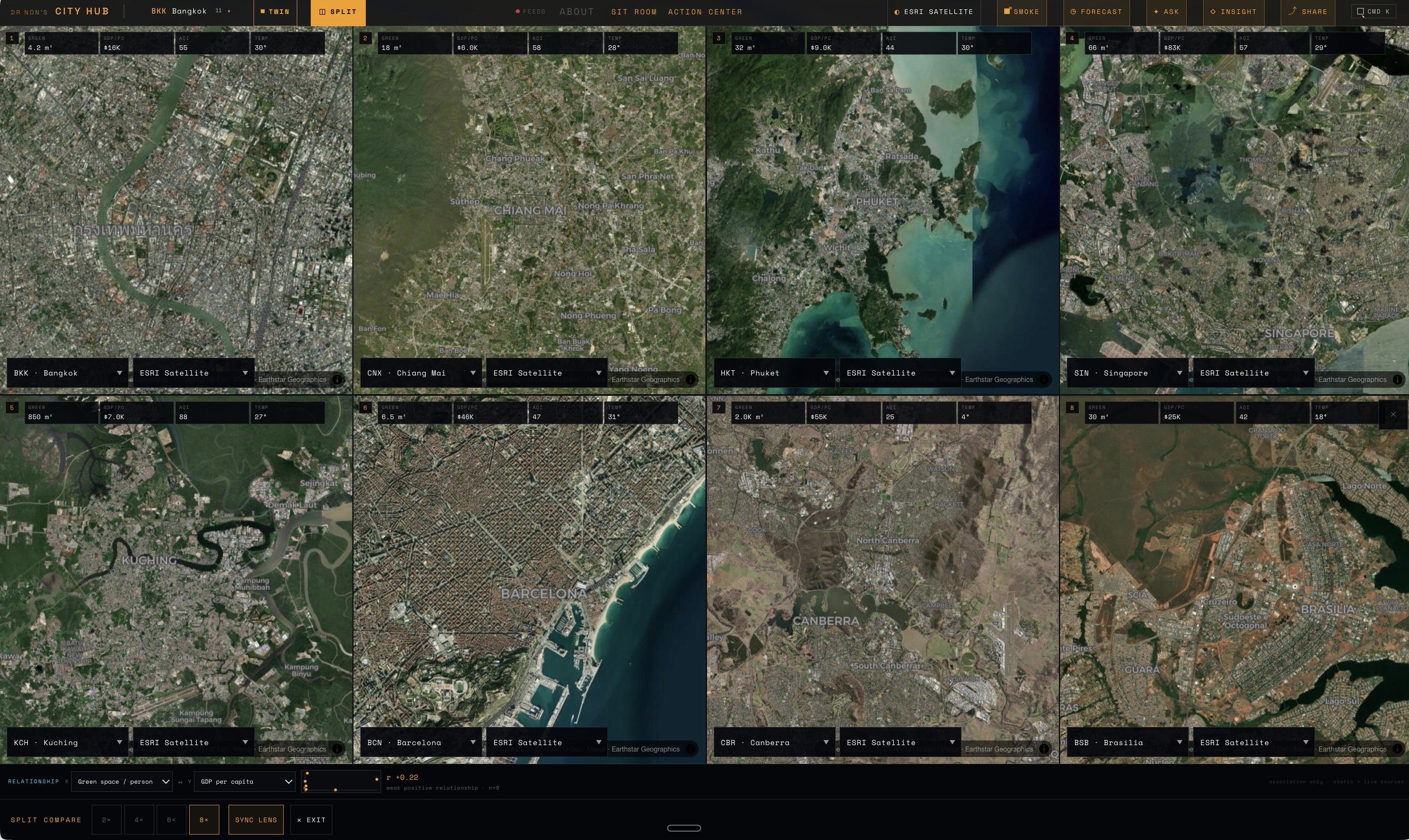
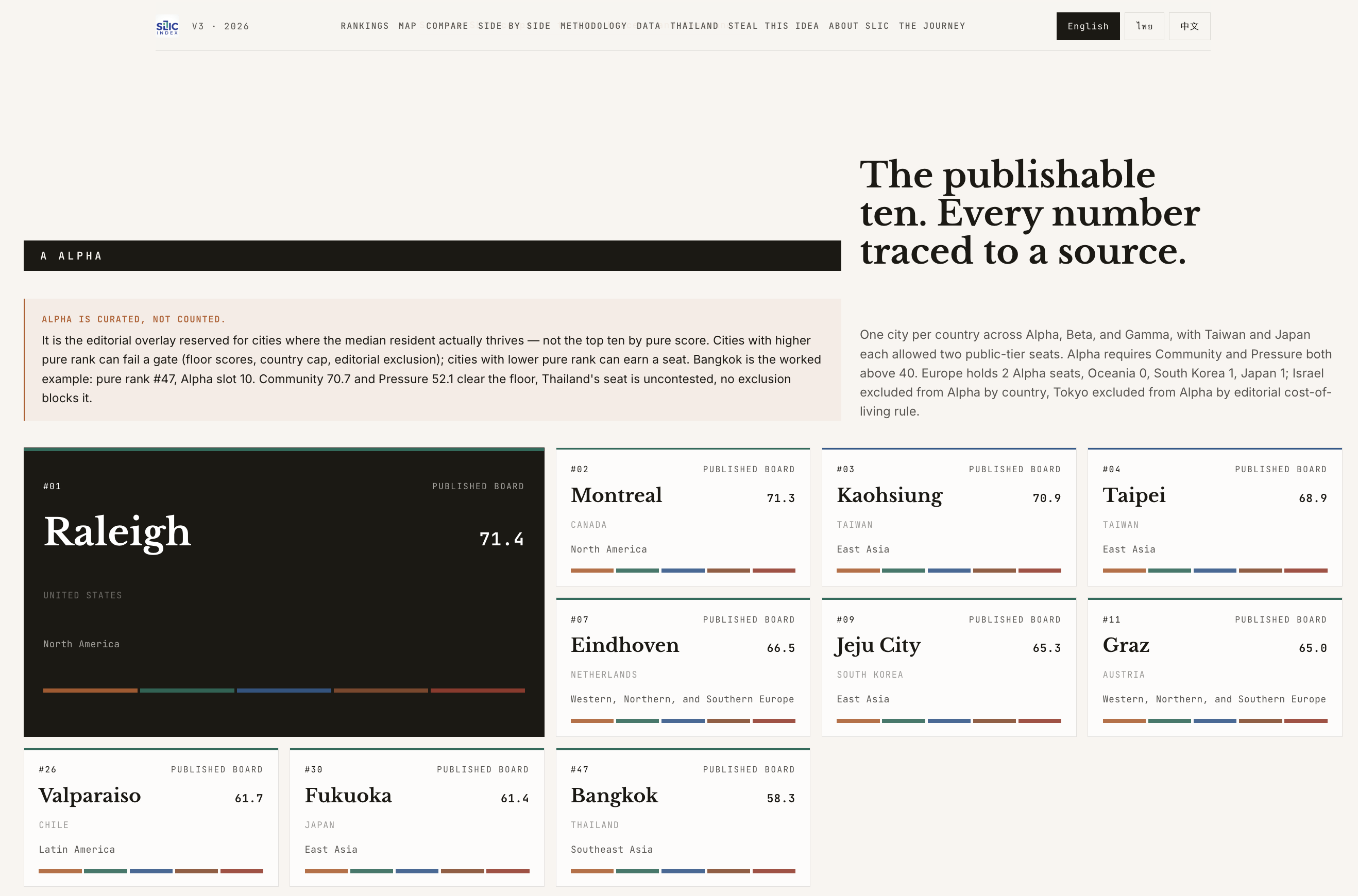
Live · 157 cities NODE_04 5 pillars · weighted live SLIC Index v3 — adjustable five-pillar ranking lab
RANK / 04 / City Benchmarking

A ranking that argues back.

The SLIC Index doesn't tell cities what they're worth. It shows them five pillars and lets them test their own priorities. Mayors decide what livability means — and the math follows.

Cities157
Pillars5 adjustable
ModeLive
AudienceMayors · Networks
Why it's special Every other livability index hands cities a finished verdict. SLIC hands them the math. Move the pillar weights, watch your ranking change — and your peers' — in real time. The argument becomes the product.
What it replaced Static prestige leaderboards. The annual ranking PDF. The conversation that ended with "we don't agree with the methodology."
Audience signal Picked up by Mayors of Europe. Live-demo'd at SCSE Taipei in 45 minutes. Treated as a civic argument, not a moodboard.
System architecture // NODE_04 · SLIC City Benchmarking
Data Sources
World Bank
Indicators
UN Datasets
depa Thailand
Programme Data
City Submissions
Engine
5-Pillar Calculator
Live weight sliders
157 cities · Real-time
Outputs
Dynamic Rankings
(reorder on adjust)
Mayors of Europe
Pickup
SCSE Taipei
Live Demo
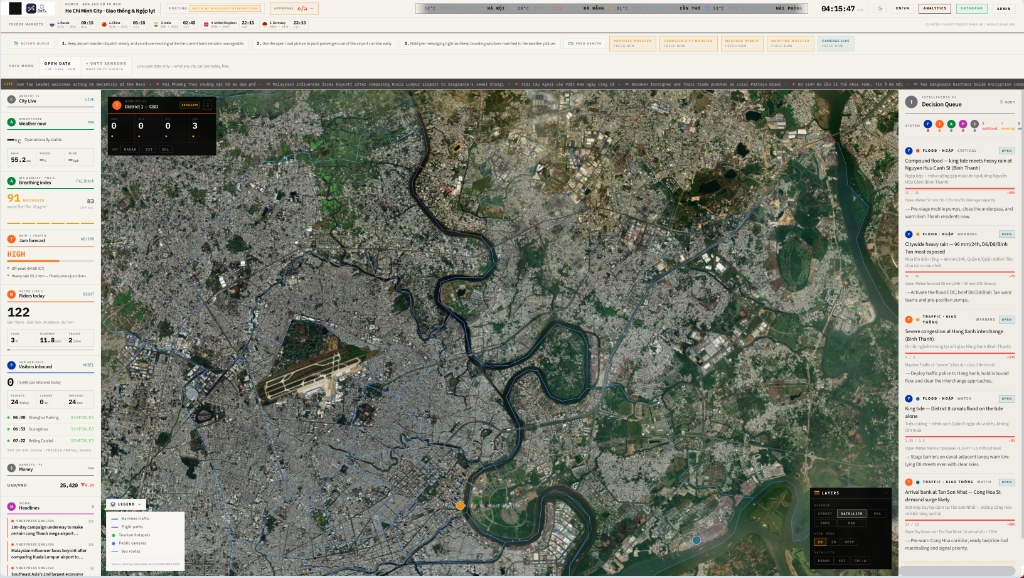
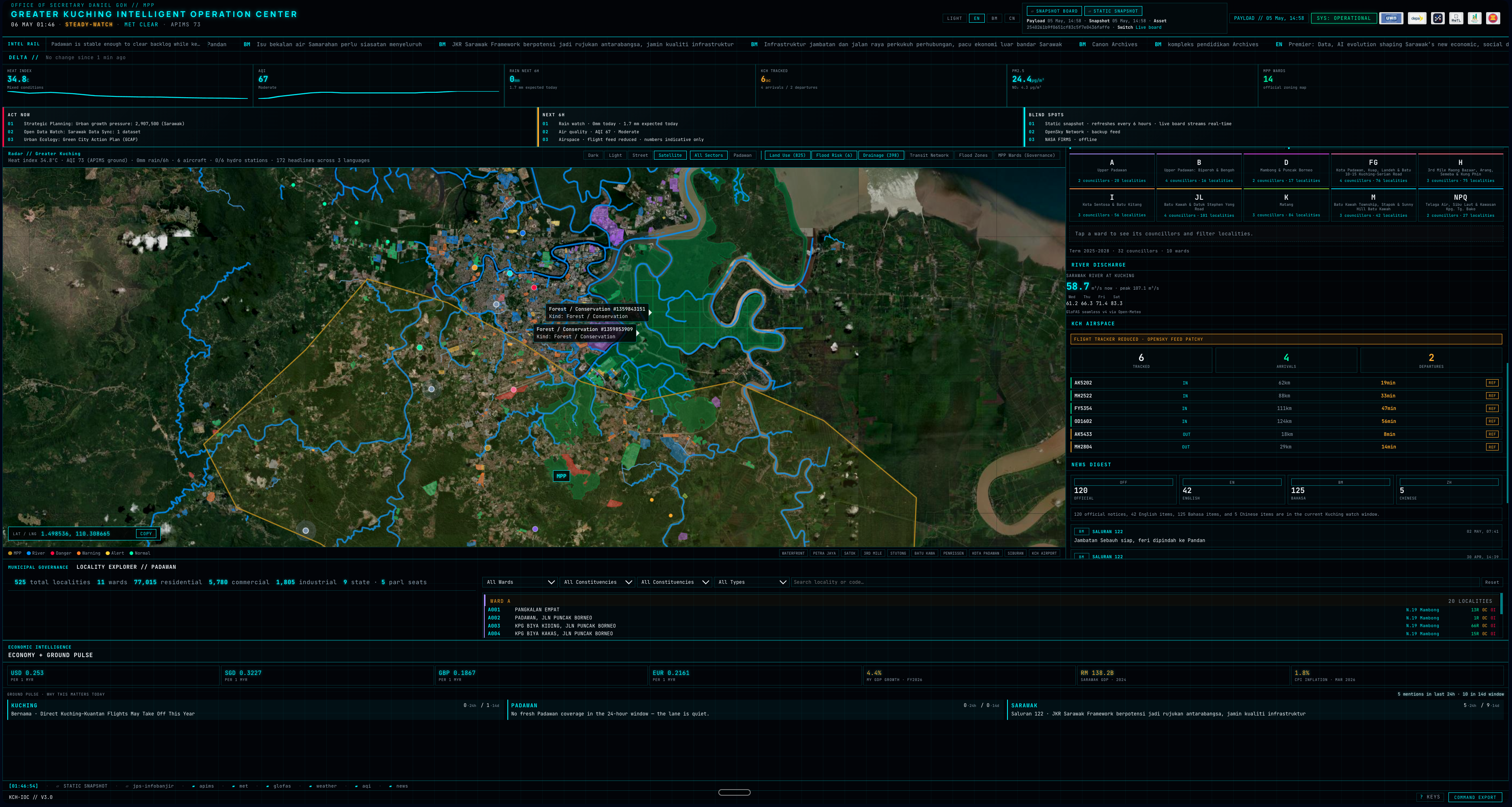
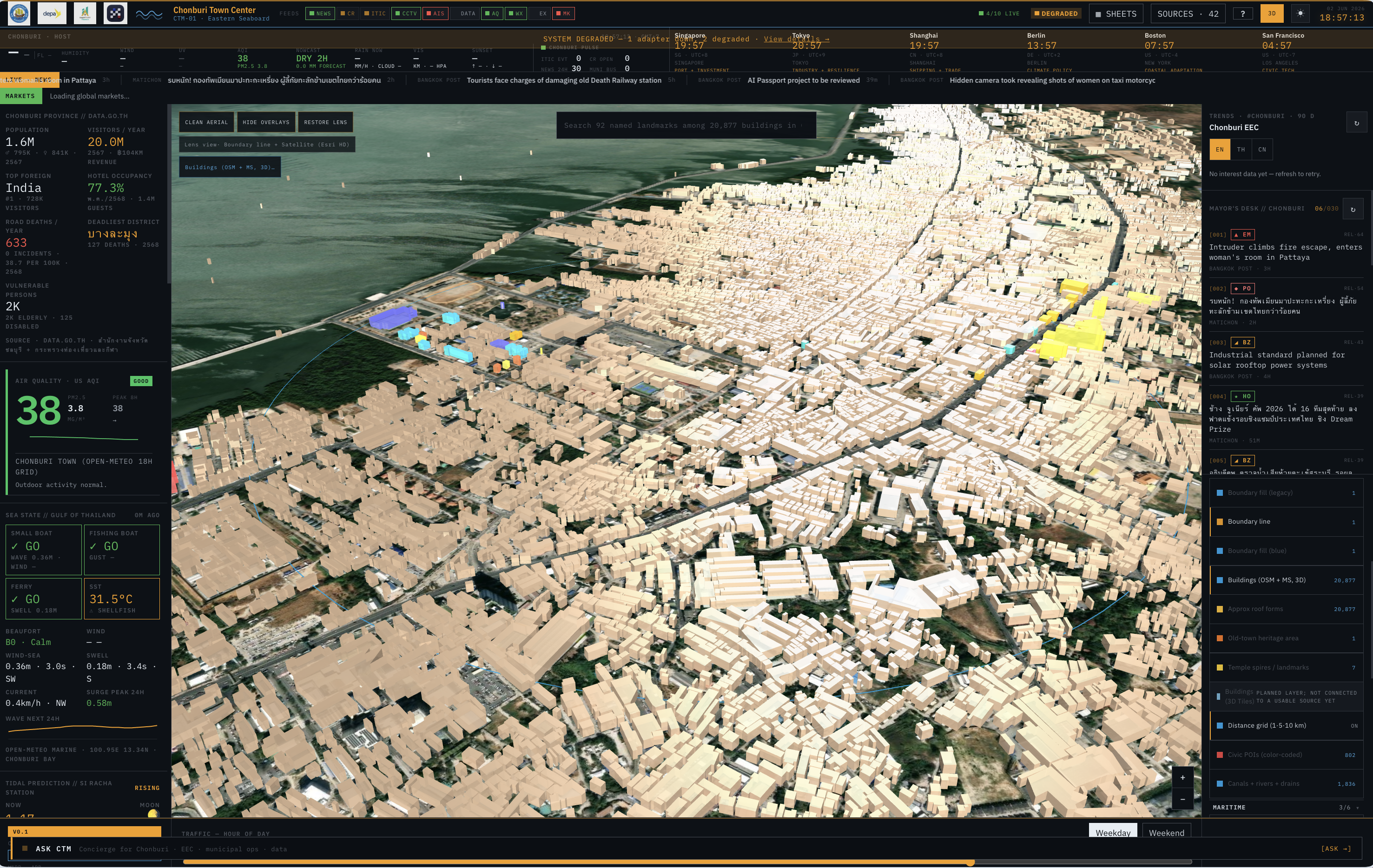
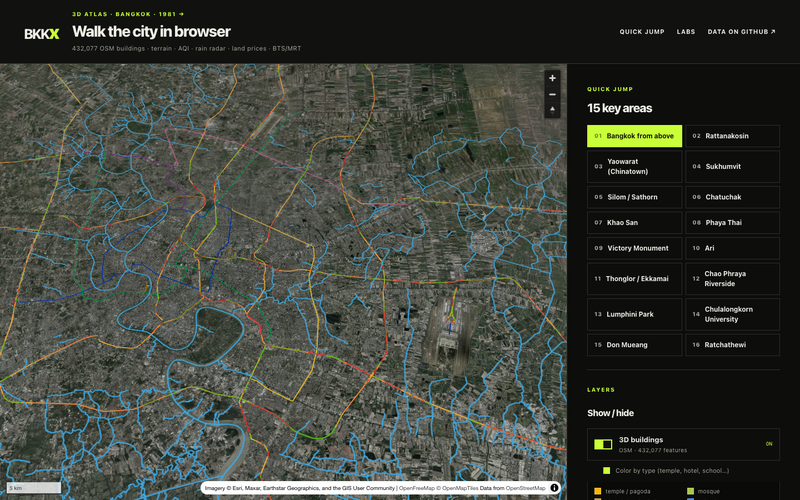
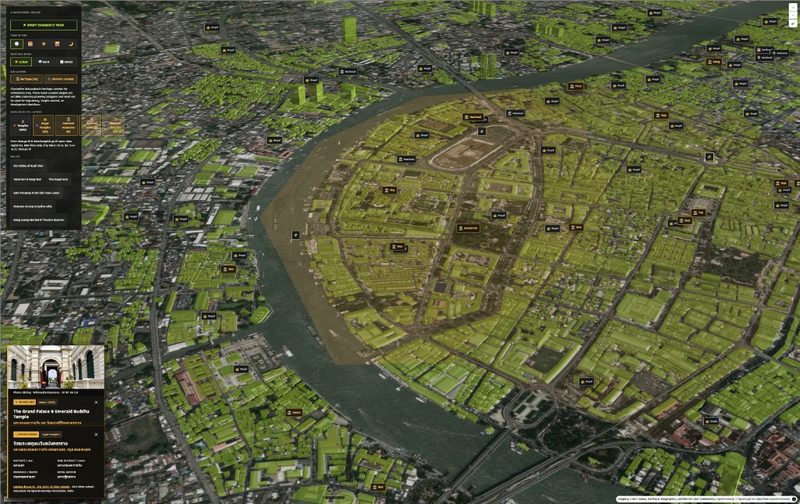
Live · Sarawak NODE_05 1.5533°N · 110.3592°E Greater Kuching Intelligent Operations Centre
PROD / 05 / Intelligent Operations

Greater Kuching, one command surface.

A full-spectrum IOC for Greater Kuching, Sarawak. Foreign exchange, flights, satellite imagery, and environmental signals — unified for the operators who run Southeast Asia's fastest-growing smart city.

RegionSarawak, MY
DataFX · Flights · Satellite
StatusLive
StackReact · GIS · Edge
Why it's special Most IOCs are single-domain. Kuching fuses cross-domain signals in one view — currency pressure, flight arrivals, Sentinel-2 sweeps, environmental reads. The operator never switches tabs to see the full picture.
Who uses it Greater Kuching city operators and planners. Built for real-time situational awareness — not a demo room, for daily use.
Why it matters Same information density a Bloomberg terminal gives a trading desk — but for a city, at a fraction of the cost.
System architecture // NODE_05 · Greater Kuching IOC
Inputs
FX Markets
(live rates)
Flight APIs
(arrivals/deps)
Sentinel-2
Satellite Sweeps
Environmental
Sensor Network
Processing
Multi-domain
Fusion Layer
React · GIS · Edge
Surfaces
IOC Command
Surface
Operator
Alert Feed
Sarawak
Situational Map
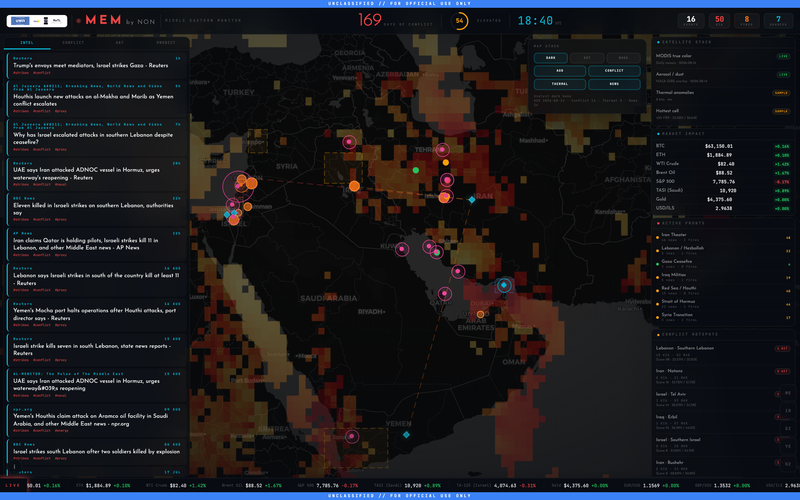
Live · Middle East NODE_06 Multi-source · Real-time MEM — fastest Middle East conflict news aggregator
PROD / 06 / Open Intelligence

News before the algorithm decides what's war.

MEM is the fastest open-source news surface for Middle Eastern conflict coverage. Live multi-source feeds, no editorial delay, no filter bubble. The signal before the cycle.

RegionMiddle East
SourcesMulti-feed
LatencyReal-time
AccessOpen · Free
Why it's special Every major news platform has an editorial layer that slows, filters, frames. MEM removes that layer. The same signals a desk analyst aggregates manually — in one surface, at machine speed.
What it replaced Three browser tabs, two Telegram channels, and a Twitter/X list — open simultaneously to triangulate what was actually happening on the ground.
Who uses it Journalists, policy analysts, NGO field teams. Anyone who needs ground-level signal faster than the 24-hour news cycle delivers it.
System architecture // NODE_06 · MEM Open Intelligence
Inputs
Wire Services
(AP, Reuters)
Telegram
Channels
RSS / API
Sources
Social Signal
Layer
Processing
Speed-first
Aggregator
No editorial delay
Surfaces
Real-time
News Surface
Analyst
Signal Feed
Open Access
Free to use
Live · Phuket Transit NODE_07 7.8804°N · 98.3923°E Phuket Smart Bus — GPS transit intelligence for riders
PROD / 07 / Transit Intelligence

The bus, tracked. The rider, informed.

Real-time GPS tracking and passenger telemetry for Phuket's smart bus network. Designed for the rider's phone first — not a control room screen. Works on the road, in the heat, with one thumb.

CoveragePhuket Island
InterfaceMobile-first
DataGPS · Telemetry
StackTypeScript · Maps
Why it's special Smart bus systems usually exist for the operator's dashboard. This one exists for the person waiting at the stop. GPS position, next arrival, route clarity — for a tourist who doesn't read Thai and a commuter who doesn't have time to guess.
What it replaced Standing at a stop with no information. A bus schedule printed in 2019. The assumption that transit on a tourist island can't be made legible.
Built on top of Phuket's existing IoT infrastructure — the same sensor layer that feeds the Governor's operations room. No new hardware.
System architecture // NODE_07 · Phuket Smart Bus
Inputs
Bus GPS
Trackers
IoT Sensor
Layer (Phuket)
Route Database
& Schedules
Processing
Telemetry
Processor
TypeScript · Maps
Surfaces
Rider Mobile
App (phone-first)
Arrival
Prediction
Route
Intelligence
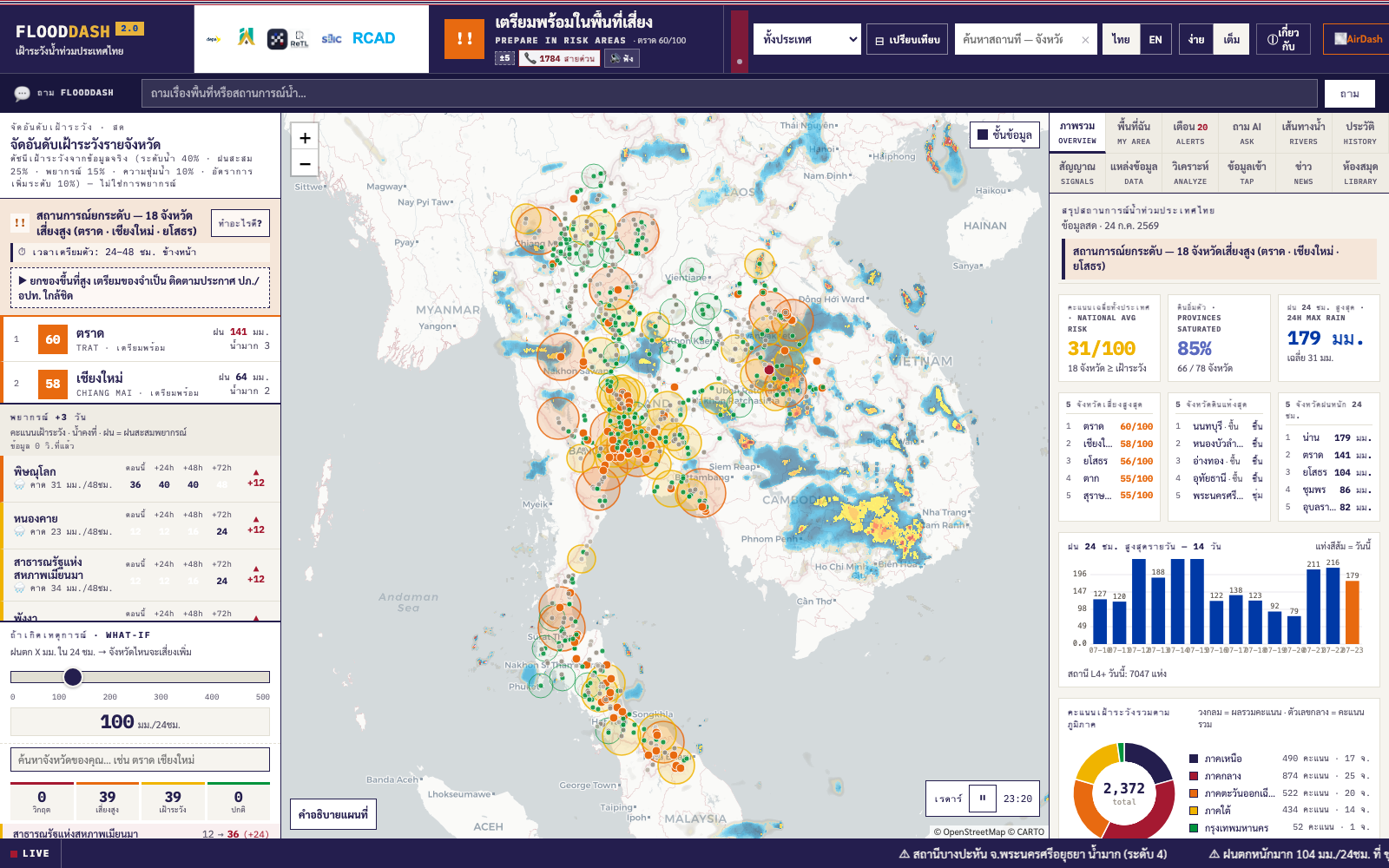
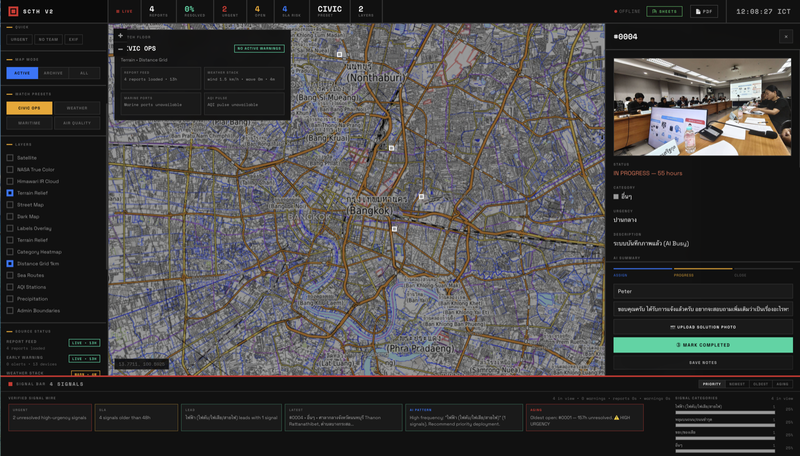
Live · City ops NODE_08 Telegram · LINE · Satellite SCTH V2 — Smart City Thailand city data platform with civic report intake, AI analysis, and live map layers
PROD / 08 / Civic Intelligence

Reports arrive. AI turns them into action.

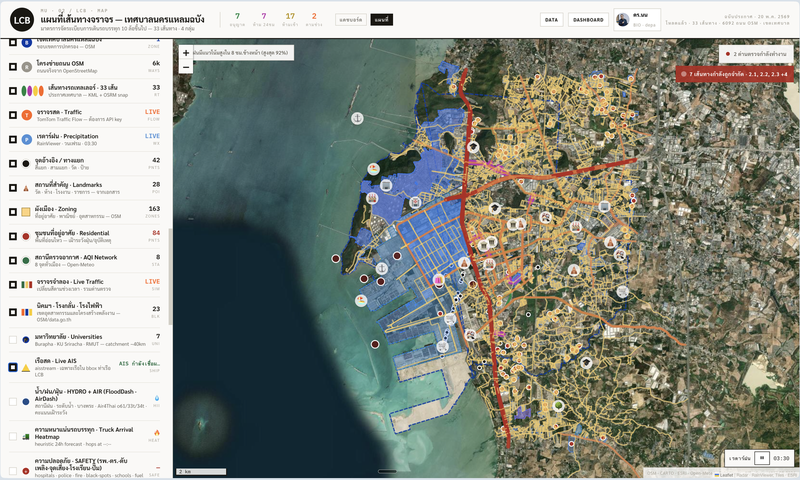
SCTH V2 is a Smart City Thailand city data platform that absorbs civic reports from Telegram and LINE, analyzes problems with AI, and overlays near-real-time satellite and map layers for city builders, city developers, and city managers.

IntakeTelegram · LINE
LayersPrecip · Aerosol · Clouds
ModeNear real-time
AITriage · Patterning
Why it's special Most city complaint systems stop at a ticket number. SCTH V2 turns the report stream into a decision surface. Messenger reports, field photos, SLA risk, and AI pattern detection sit on the same map as precipitation, aerosol, cloud, terrain, and street layers.
What it replaced Screenshots in chat groups, manual spreadsheet triage, static map layers, and the delay between "someone reported it" and "someone can act on it."
Decision power City teams can absorb reports, assign owners, analyze recurring patterns, export sheets or PDFs, and push response tasks while the city context is still live.
Live access Proprietary system under continuous daily development. The link runs a live tunnel — if it doesn't resolve, the system is mid-upgrade. Check back in a moment.
System architecture // NODE_08 · SCTH V2 Civic Intelligence
Inputs
Telegram + LINE
Messenger Reports
Problem Reporting
Forms + Photos
Satellite Layers
Precipitation · Aerosol · Clouds
Street · Terrain
Map Layers
Processing
AI Triage Engine
Pattern Detection
SLA + Urgency Analysis
Layer Fusion
Near-real-time Context
Surfaces
City Ops
Command Dashboard
Assignment +
Resolution Workflow
Sheets / PDF
Decision Exports
Builder / Manager
Action View
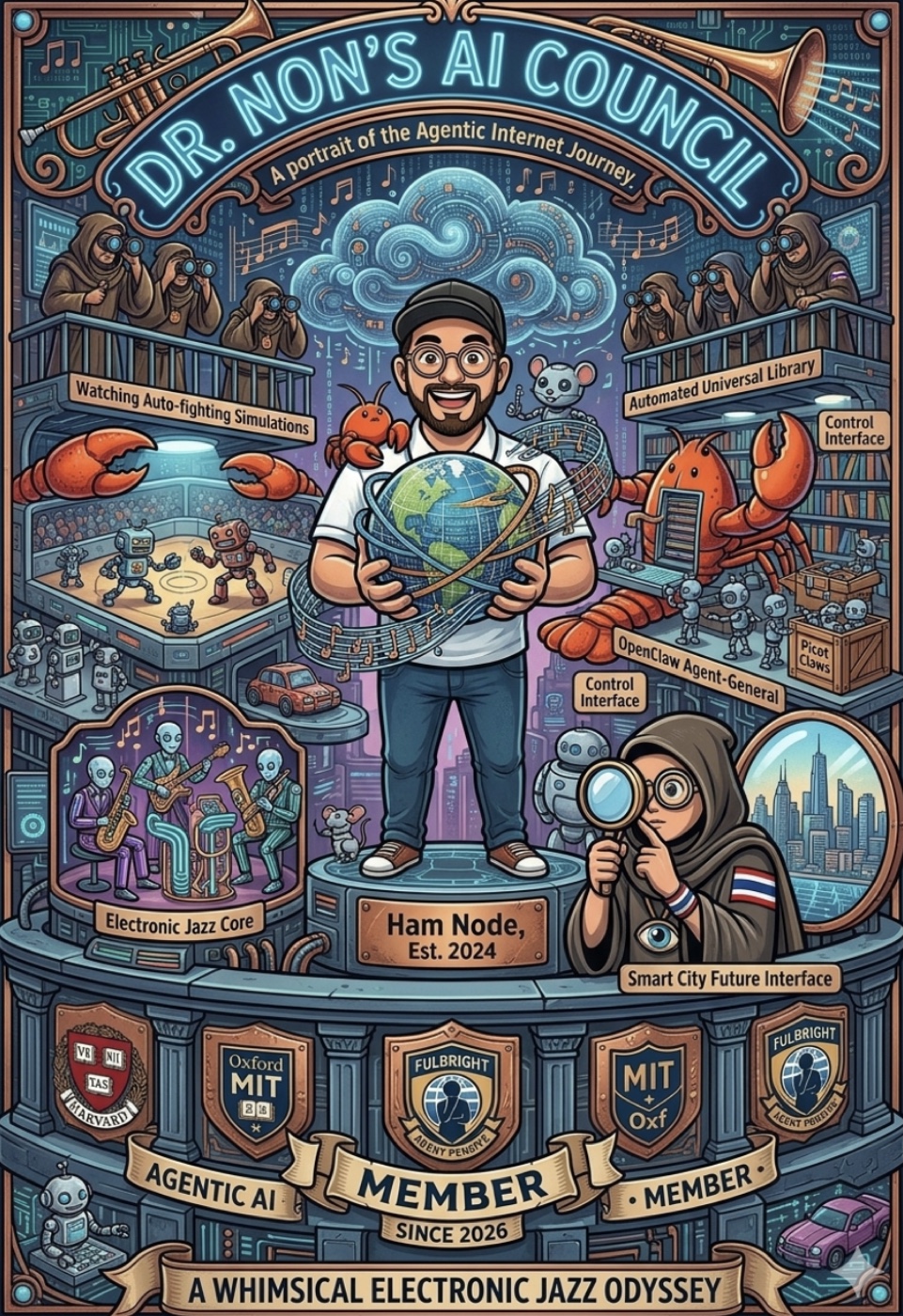
Proprietary · Local-first NODE_09 Bangkok · 11 Justices · ~$3/mo Dr Non's AI Council — a whimsical portrait of the agentic internet journey, featuring 11 AI justices
PROP / 09 / Agentic Intelligence

Eleven voices. One decision.

Dr Non's AI Council is a personal multi-agent deliberation system: 11 AI justices with palindromic names (Tenet, Radar, Otto, Hannah, Ada…) running continuously on a local Mac, arguing through a shared transcript log, for around $3 a month. Trained on personal journals, decisions, and voice — proprietary by design, not by accident.

Justices11 · palindromic names
StackMistral · Llama · ThaiLLM
Cost~$3 / month
ModeLocal-first · launchd
Why it exists Single models give one answer. Problems worth solving deserve argument. The council runs four operating modes — VERIFY, DECIDE, EXPLORE, DEBATE — and justices use explicit moves (EXPAND, QUALIFY, CONCEDE, STAND, PASS) so every position change is visible and traceable.
What it costs Manus-class autonomous-agent capability at $3/month. The council chair runs on Mistral Large 3. The Thai-native skeptic (Ada) runs on ThaiLLM — a government-backed model, free. The executor (Otto) handles OCR, video downloads, email drafts, PDF generation, and Google Drive sync without touching cloud infrastructure.
Why no demo The council is trained on Dr Non's personal journals, decisions, meeting notes, and voice. Proprietary by necessity. The protocol stack — ~600 lines of Python — is open. The IP is the coordination methodology, not the weights.
System architecture // NODE_09 · AI Council · Agentic Deliberation
Inputs
User question
via Telegram
Shared transcript
~/.council/transcript.jsonl
Personal data
Journals · Notes · Voice
External tools
OCR · Video · Drive · PDF
The Council
Tenet (Chair)
Mistral Large 3
First-principles
Radar · Hannah
Research + Archive
Ada (Skeptic)
ThaiLLM · Bias check
Otto (Executor)
Llama · Tool runner
Outputs
Deliberated answer
VERIFY · DECIDE · EXPLORE
Executed task
File · Email · PDF · QR
Decision log
Append-only record
Live · Enterprise HR NODE_10 Capability Engine · Activated TKCX — Talent Knowledge Collaborative X System, a game-based talent intelligence platform
PROD / 10 / Talent Intelligence

HR has been a record system long enough.

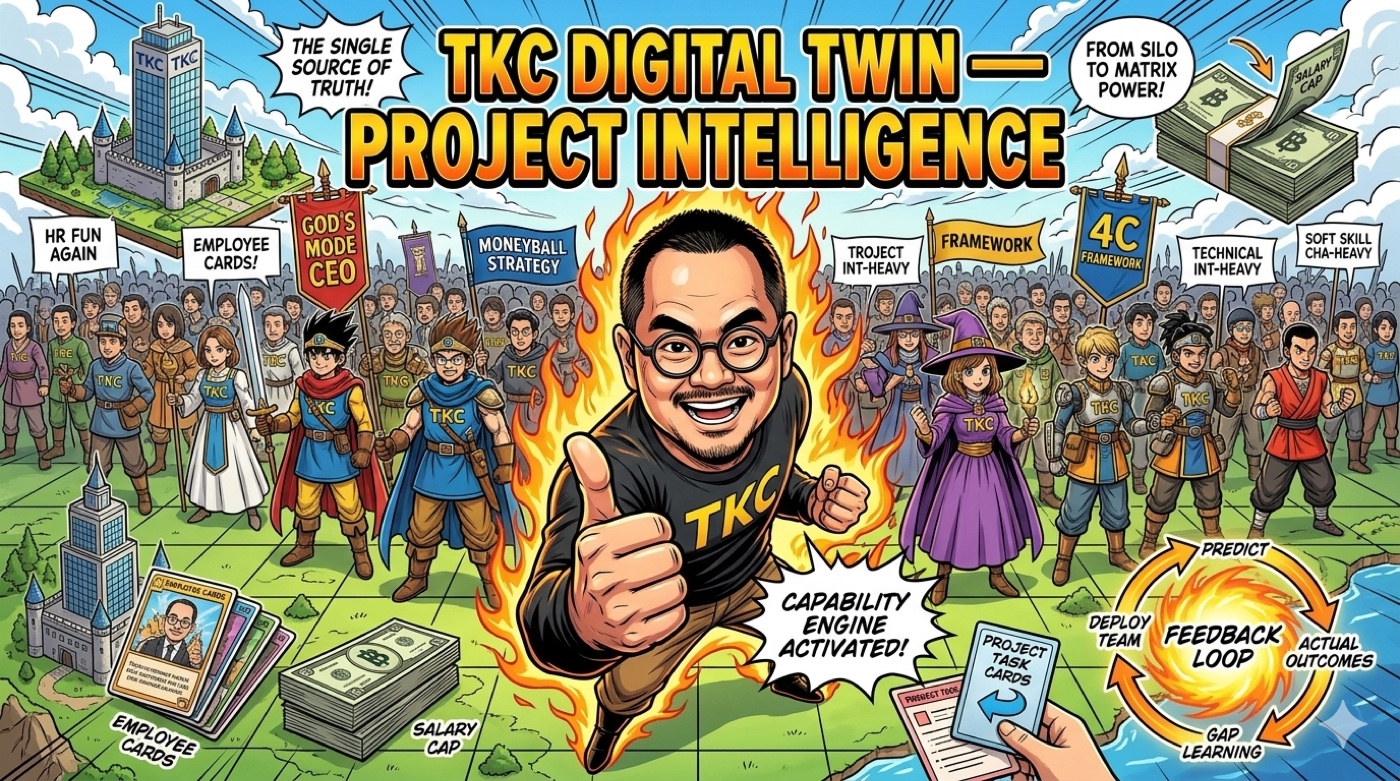
Talent Knowledge Collaborative Explorers (TKCX) is a game-based talent operating system that treats employees as party members, projects as quests, and team assembly as strategy. It makes every decision about people visible, measurable, and connected to outcomes — replacing org-chart politics with capability intelligence.

Employees348 · extensible
Screens8 command views
StackNext.js · Postgres · Sheets
EngineDQ3 archetypes · Readiness
The problem Most HR systems are compliance records, not intelligence. They tell you who is employed — not who should be deployed, where, and with whom. Decisions about people are made on gut feel and political capital. The best people leave. The comfortable ones stay. Nobody can see why.
The engine Built on Dragon Quest III's party system. Five archetypes map to real workplace roles (captain, tech, sales, ops, scout). A Moneyball budget cap — project budget ÷ 10 = monthly salary ceiling — forces allocation discipline. The readiness formula weighs coverage, quality, chemistry, and morale so the right team is visible before the project starts, not after it fails.
What it changes Directors stop hoarding people. Projects stop running on political capital. Skill gaps become visible before they become failures. And HR — renamed Talent Incubation — becomes the most strategic function in the building, not the most avoided one.
System architecture // NODE_10 · TKCX Talent Intelligence
Inputs
Employee roster
348 heroes · skills
Project pipeline
Quests · budget · deadline
Check-in stream
Lobby · daily signals
Capability data
Certs · scores · history
Game Engine
DQ3 Archetypes
Captain · Tech · Sales
Ops · Scout · Wildcard
Readiness Formula
Coverage + Chemistry
+ Morale + Quality
Moneyball Cap
Budget ÷ 10
= Salary ceiling / mo
Predict → Deploy
→ Actual → Feedback
Loop
8 Screens
Cockpit · org health
Formation · team assembly
Matrix · skill heatmap
Ninja · mission readiness
Signals · predict vs real
Roster · 348 cards
Lobby · live check-in
Ledger · audit log
Research Preview · Open Protocol NODE_11 Obsidian · MCP · 19 Server Configs Second Brain OS — Dr Non's Neurological Obsidian Vault connecting to AI coding platforms via MCP
PREV / 11 / Knowledge Intelligence

The AI that knows you.

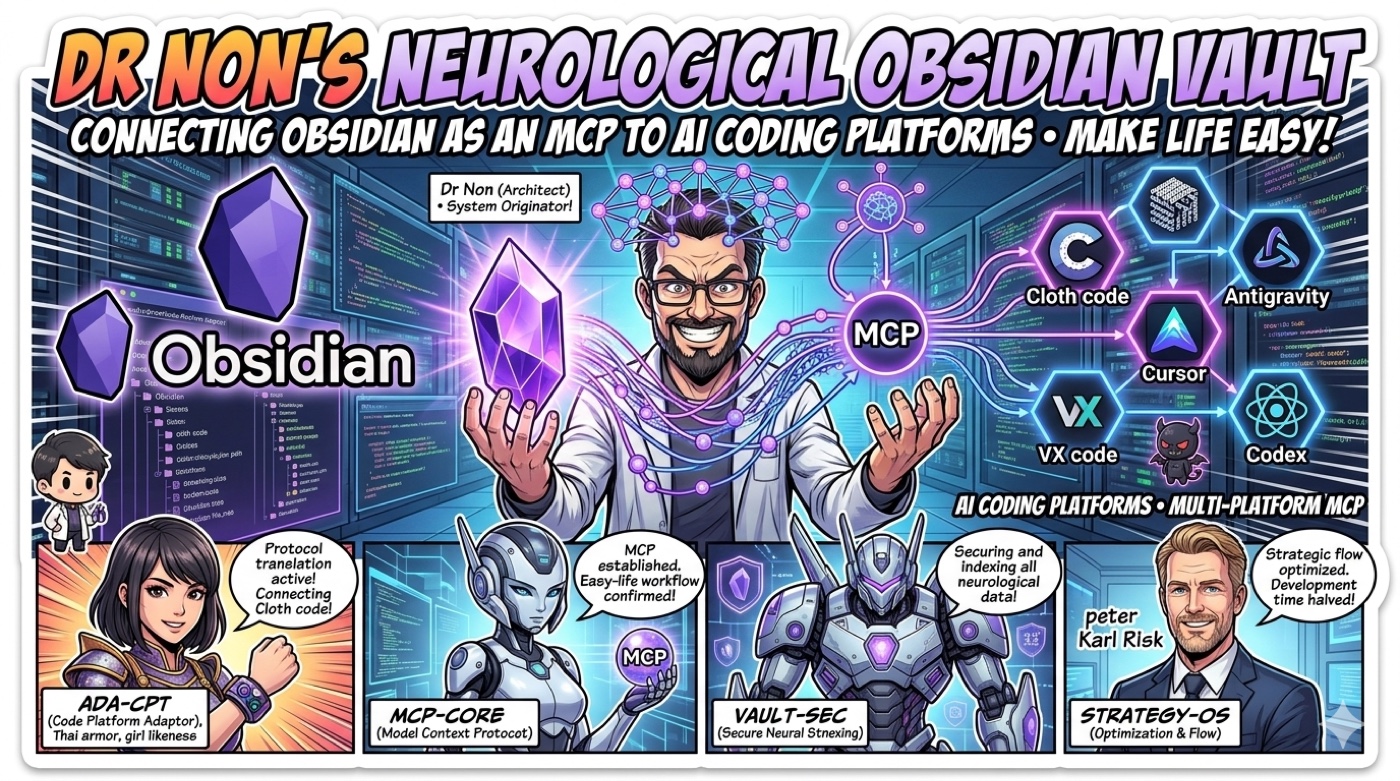
Second Brain OS connects your Obsidian vault to every AI coding platform simultaneously via MCP. Brain-anatomy folder structure. 19 server configs. AI agents that access your persona blueprint, write in your voice, and remember every decision you've ever logged. The knowledge you've been building for years — finally working for you.

ProtocolMCP · 19 server configs
Brain layers10 (anatomy-named)
PlatformsCursor · Codex · Claude Code
BackupGit + rsync · two-layer
The gap it closes Every AI session starts cold. It doesn't know your voice, your values, your past decisions, or the 5 years of journal entries that shaped your thinking. Second Brain OS feeds all of that into every coding platform simultaneously via a single MCP connection — so the AI you work with already knows who it's working with.
How it's built Your Obsidian vault is structured like a brain: PrefrontalCortex for strategy, Hippocampus for atomic memories, TemporalLobe for patterns, Cerebellum for skills and procedures. 19 MCP server configurations connect this living knowledge graph to Cursor, Codex, Claude Code, and every other platform in your stack — at once.
Why it's open The architecture is MIT-licensed. The brain is yours. Anyone can fork the structure, adapt the MCP configs, and connect their own vault. Includes a 12-level diagnostic for stripping AI-speak out of your writing — so the knowledge you accumulate stays in your voice, not the model's.
System architecture // NODE_11 · Second Brain OS · Knowledge Intelligence
Vault Layers
PrefrontalCortex
Strategy + Planning
Hippocampus
Atomic Memories
TemporalLobe
Reference + Patterns
FrontalLobe
Daily Notes + Active Work
MCP Core
19 Server Configs
Persona Blueprint
Voice + Values Access
Vault Health Monitor
Backup Orchestration
Git + rsync layers
AI Platforms
Claude Code
Context-aware builds
Cursor · Codex
Voice-matched output
Memory Persistence
Across all sessions
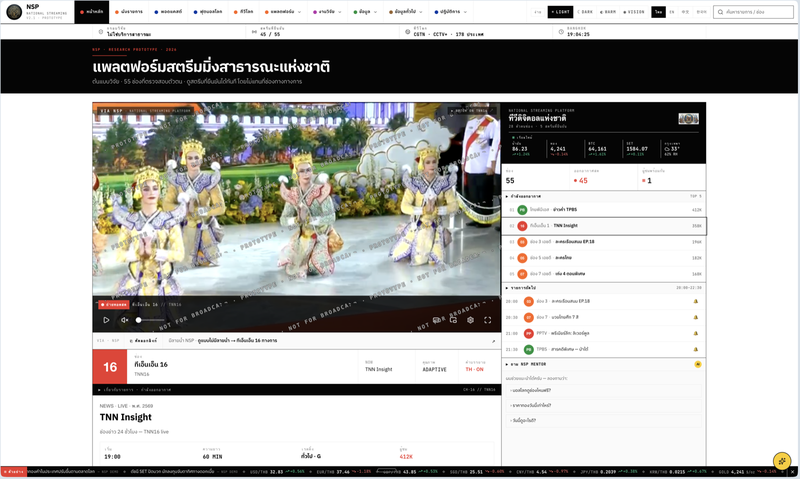
Live · National Broadcast NODE_12 21 Ch · 1.84M Concurrent · NBTC NSP — Thailand National Streaming Platform, 21 free digital TV channels with live EPG, AI guide, and viewer telemetry
PROD / 12 / National Broadcast

21 channels. Free. Everywhere.

NSP is Thailand's national streaming platform — all 21 NBTC-licensed digital TV channels, free, full HD, on any device. Live EPG, per-channel viewership telemetry, AI content guide, and CAP v1.2 emergency alert integration in one interface.

Channels21 / Free-to-air
Peak1.84M concurrent
StreamLL-HLS · Full HD
AuthorityNBTC · กสทช.
Why it's special Most national TV portals are afterthoughts. NSP puts all 21 licensed channels in one interface with live EPG, per-channel concurrency, stream health telemetry, and an AI guide that answers "what's on now?" across the whole kingdom — without an app install.
What it replaced Fragmented broadcaster apps, illegal streams, and the assumption that free-to-air TV can't be made as legible as a subscription platform.
Decision power Operators see live viewer concurrency, channel audience share, and stream health in real time. The CAP v1.2 emergency warning integration means national alerts surface through the same interface as entertainment — no separate system.
Live access National deployment under NBTC licensing authority. Open to all devices, no account required.
System architecture // NODE_12 · NSP National Streaming Platform
Inputs
21 Licensed
Broadcaster Feeds
EPG Data
Programme Schedule
CAP v1.2
Emergency Alerts
Viewer Telemetry
Concurrency · Share
Processing
LL-HLS
Stream Engine
Full HD · Adaptive
NSP Mentor AI
Content Guide
Surfaces
Any Device
No Install Required
Live EPG
All 21 Channels
Ops Dashboard
Telemetry · Alerts
Two stages, one signal

Governments are tired of waiting for the deck.

In six months we took the same thesis to two of Asia's biggest stages. Both rooms were full. Both had the same response: build it now, not after the next budget cycle.

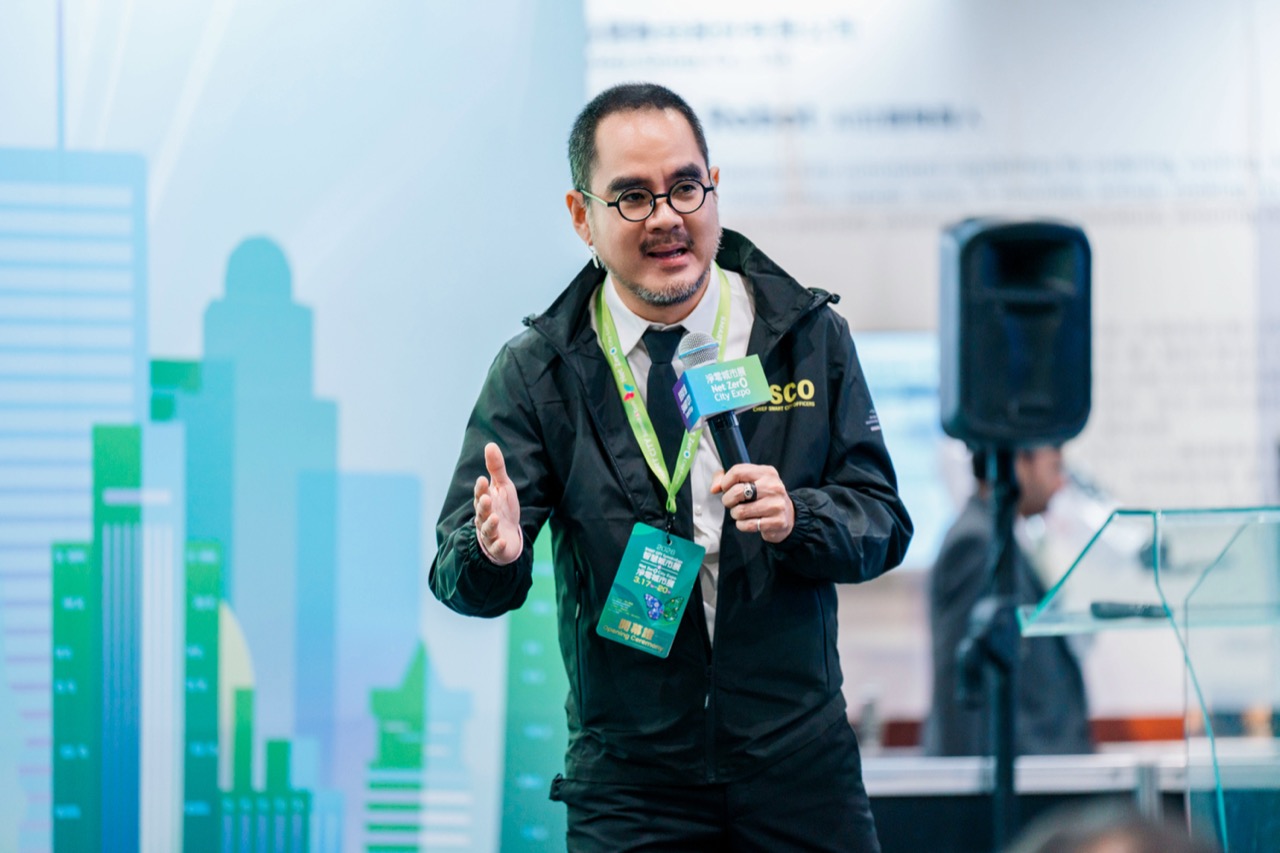
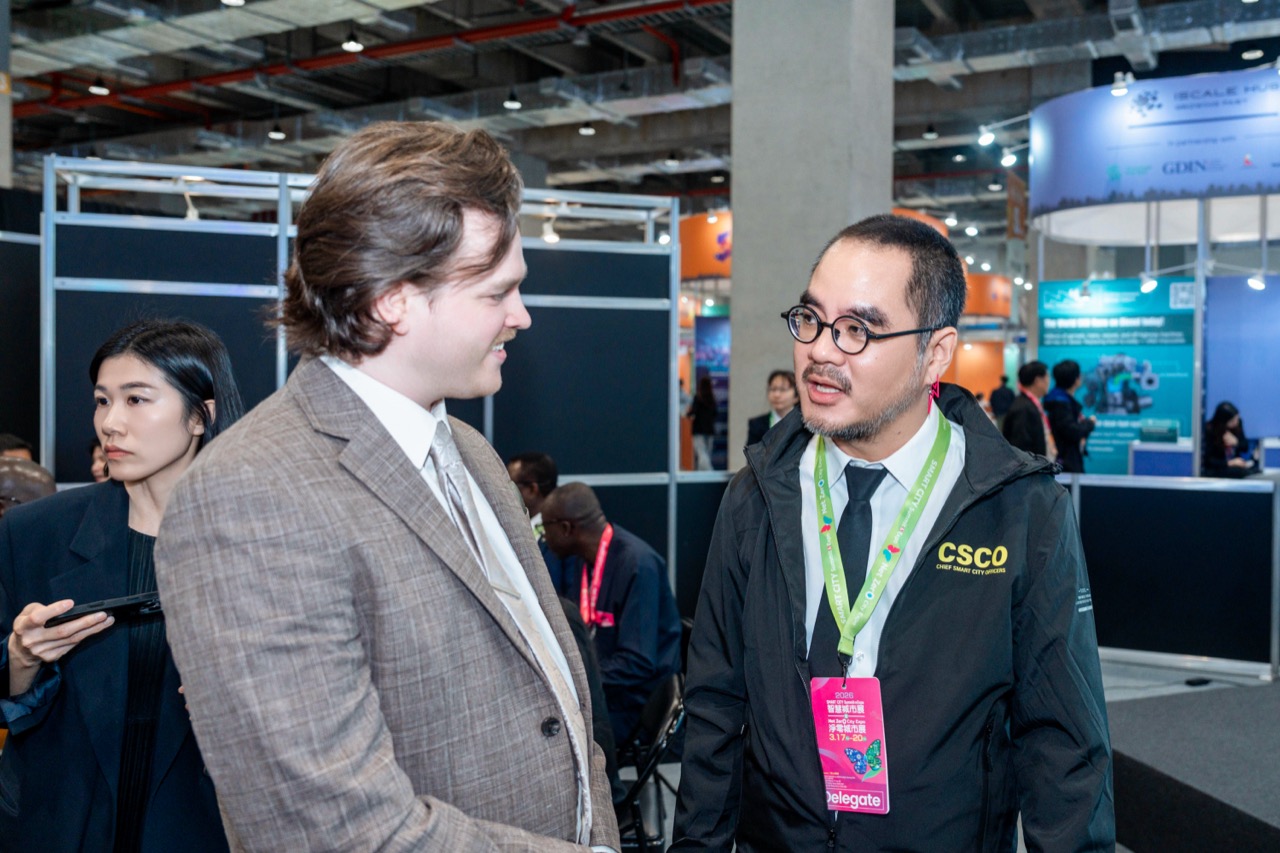
SCSE 2026 · Taipei Dr. Non Arkara delivering the keynote at SCSE 2026 Taipei
Taipei · City Vision Stage · March 2026

Live dashboard, demo'd in 45 minutes.

Keynote at the Smart City Summit & Expo. Working surface in the room, not concept art. SLIC went live during the talk: 157 cities, five pillars, adjustable ranking logic.

"We didn't build an index for the shelf. We built a command system for the street. You build the ranking; we build the reality." — Dr. Non, Taipei keynote
174Cities indexed
53Nations represented
3,000+Intel partners
45mFirst live demo
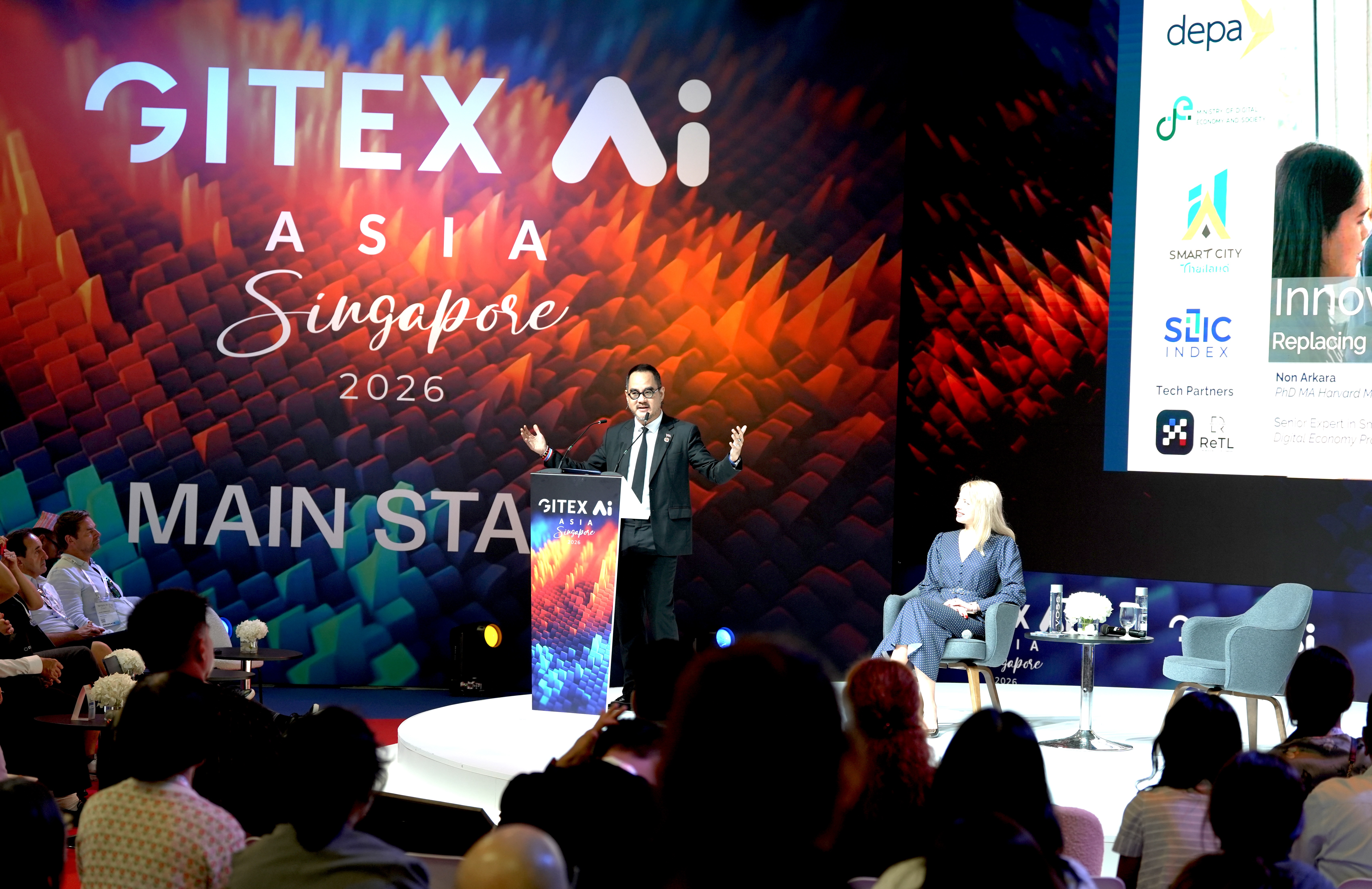
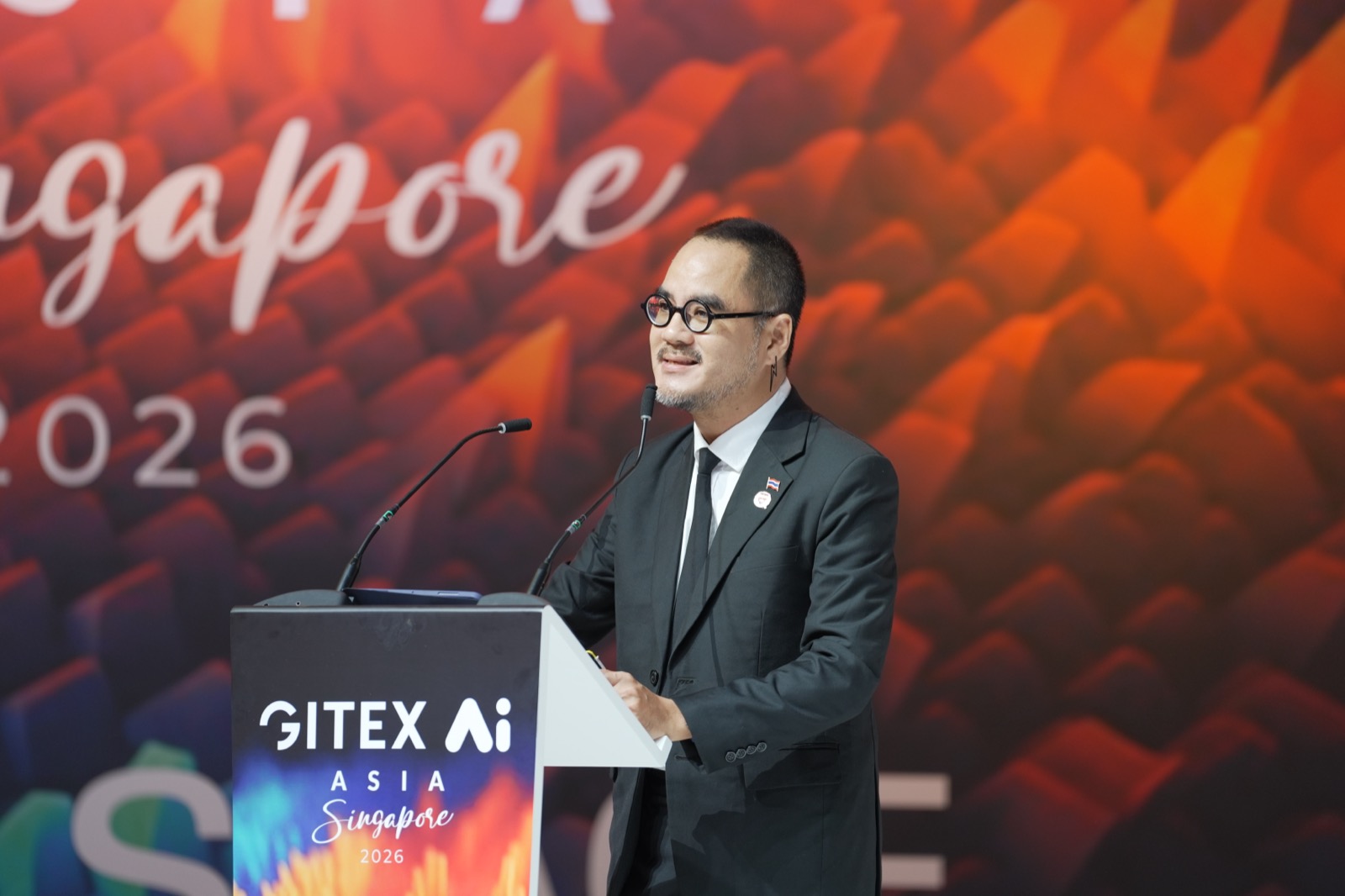
GITEX Asia 2026 · Singapore Dr. Non on the main stage at GITEX Asia 2026 Singapore, with Smart City Thailand and SLIC Index as tech partners
Singapore · Marina Bay Sands · Main Stage · April 2026

Standing room only.

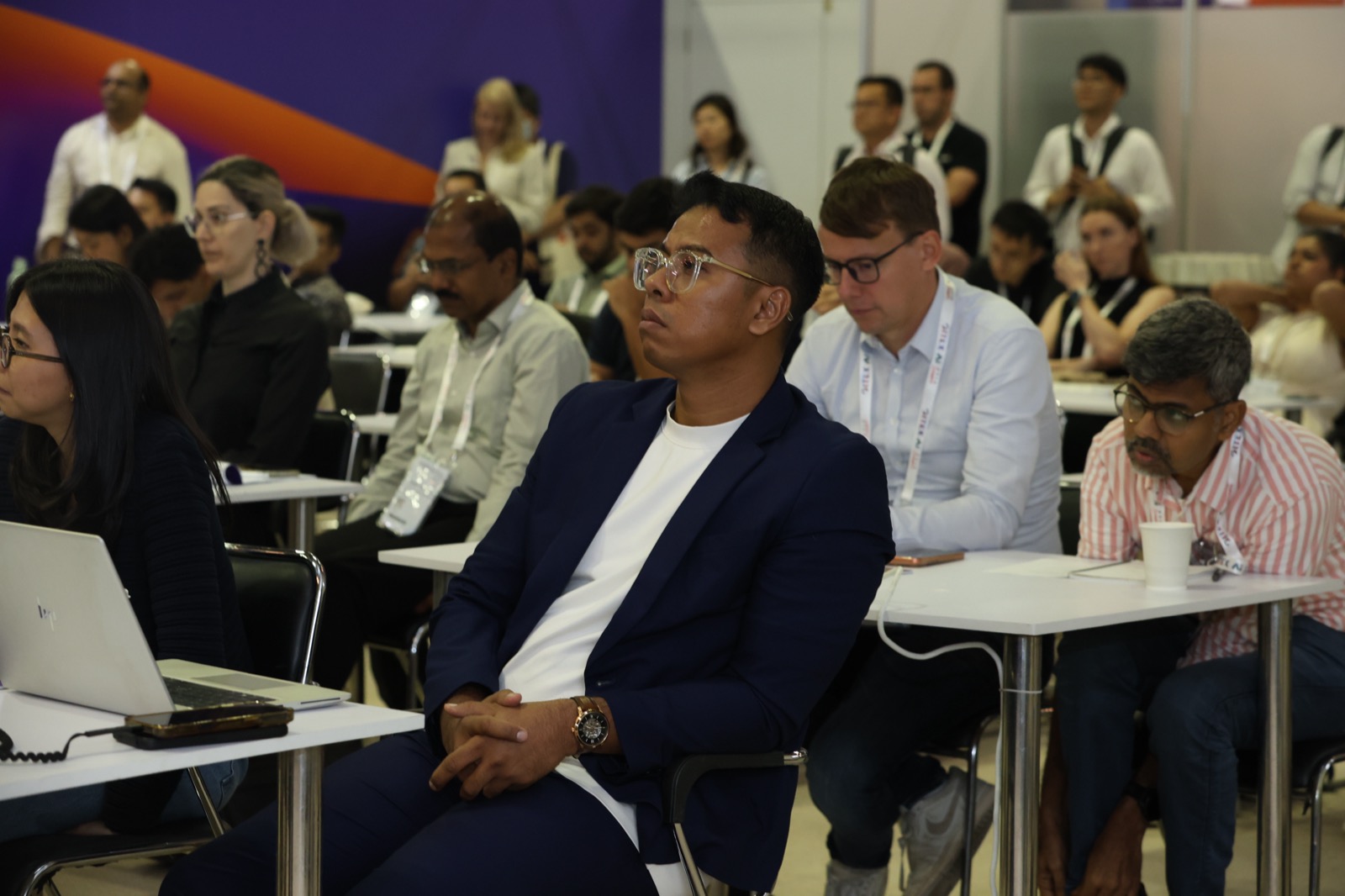
Main-stage keynote at GITEX AI Asia. Then a workshop on Government Innovation as a Service that hit capacity within minutes — standing room taken, hallway full, every face locked on the live demo.

"The room was standing-room only. That is not applause — that is a demand signal. Governments want working systems. They are tired of waiting for the deck." — Dr. Non, post-keynote
1,000+Main stage audience
23K+Total attendees
110+Nations represented
FullWorkshop capacity
Who builds it

Two founders. No handlers.

You talk to the people who write the code and decide the architecture. When the work needs UAV operators or traffic engineers or policy translators, we pull them in for that mission only — never as a standing bench.

Dr. Non Arkaraprasertkul and Dr. Poon Thiengburanathum, co-founders of Axiom
Co-Founders · Bangkok Non & Poon
Co-Founder · Systems & Story

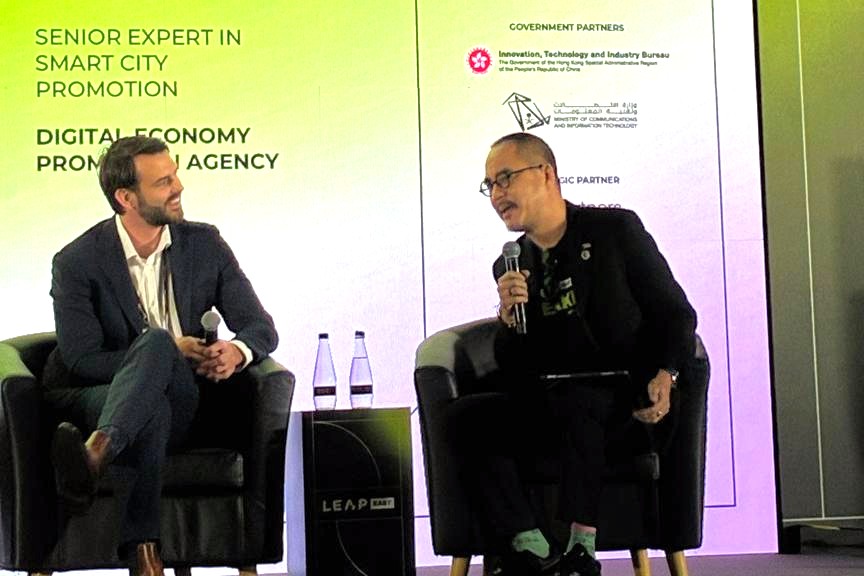
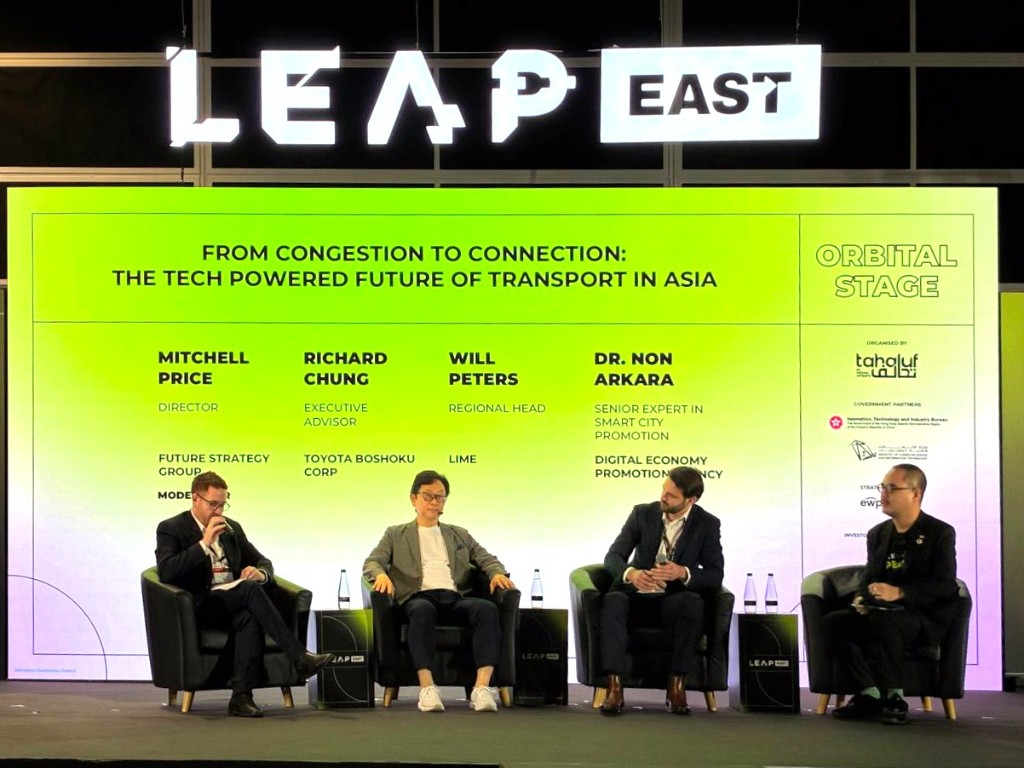
Dr. Non Arkaraprasertkul

Anthropologist, architect, builder. He watches how cities actually behave, then turns that mess into interfaces people use without a training manual.

Harvard PhD in Anthropology. MIT and Oxford alumnus. Former Visiting Lecturer at MIT, postdoctoral fellow at NYU. He designs from fieldwork first — because people aren't spreadsheets and cities aren't slides.

PhD · Harvard MPhil · Oxford MSc · MIT Visiting Lecturer · MIT
ResearchGate ↗
Non Arkara, PhD — Quick Profile
Current Role

Senior Expert in Smart City Promotion, Digital Economy Promotion Agency (depa), Bangkok — May 2019–present. Advisor to Thailand Media Fund, SLIC, NXPO, and the National Strategic Taskforce on Northern Economic Corridor (NeEC).

Education
  • PhD in Anthropology, Harvard University, 2016
  • MA in Anthropology, Harvard University, 2015
  • MPhil in Modern Chinese Studies, University of Oxford, 2010
  • MSc in Architecture Studies + Urban Design Certificate, MIT, 2007
  • BArch, First Class Honors / Summa Cum Laude, KMITL, 2004
Selected Roles
  • Visiting Lecturer, MIT — Architecture and Urban Design
  • Global Postdoctoral Fellow, New York University Shanghai
  • Expert-In-Residence (Urban Anthropology), IDEO Shanghai
  • Honorary Senior Lecturer, University of Sydney
  • Rectorial Visiting Professor, Jagiellonian University, Kraków
  • Expert (Product and Service Design), True Digital Group, Bangkok
  • Teaching Fellow, Harvard University
Scale of Work
  • 120+ technology and public-private projects across 77 Thai provinces
  • 5,000+ government officials trained in digital literacy and smart city
  • 300+ keynote appearances at global and domestic forums
  • 50+ publications in Urban Studies, Journal of Urban Design, and others
Selected Awards
  • Tomorrow City China Leaders' Award, 2025
  • ASOCIO Best Project (DX) Award, 2024
  • Smart City Expo World Congress — Global Leadership Award, 2024
  • Taiwan Presidential Hackathon — Excellent Team, International Track, 2023
  • Expo 2020 Dubai Future Water Hack — First Prize, 2022
Co-Founder · Infrastructure & Delivery

Dr. Poon Thiengburanathum

Engineer, strategist, operational anchor. He keeps ambition tied to working systems and makes sure the product survives contact with reality.

Associate Professor at Chiang Mai University. Co-author of Chiang Mai's Smart City Master Plan. Works on cities as complex adaptive systems — real-time bus prediction, transit decision support, sustainable infrastructure.

PhD · Civil Engineering Assoc. Prof. · CMU Smart City Master Plan
ResearchGate ↗
Assoc. Prof. Dr. Poon Thiengburanathum
Current Roles

Deputy Director, Program Management Unit for Area-Based Development (PMU-A), Ministry of Higher Education, Science, Research and Innovation, Thailand; Director, Excellence Center for Urban Study and Public Policy (ECUP), Chiang Mai University.

Education
  • B.Eng. in Civil Engineering, Chiang Mai University, 1995
  • M.S. in Construction Management, University of Colorado at Boulder, 1997
  • Ph.D. in Construction Management, University of Colorado at Boulder, 2003; minors in Operations Research and Transportation Engineering
  • M.S. in Transportation Engineering, University of Colorado at Denver, 2003
Core Expertise

Civil engineering, construction management, sustainable infrastructure development, climate change, disaster management, logistics, urban planning, urban mobility, and transportation systems.

Selected Work
  • Head of Sustainable Infrastructure Development and Climate Change Research Unit, Chiang Mai University, 2010–present
  • Lead Coordinator, Research University Network (RUN) for Climate Change and Disaster Management, 2015–present
  • Bus rapid transit and mass transportation studies in Chiang Mai
  • Integrated land-use, logistics, and transport management with World Bank
  • Green logistics and renewable energy projects for agriculture and industry
  • Disaster management for critical infrastructure and supply chains

The collective, on call.

Researchers, traffic engineers, anthropologists, financiers, policy translators, and media operators. They join by problem, not by org chart. We pay for the brains we need, when we need them.

  • Traffic engineers
  • UAV operators
  • Economists
  • Financiers
  • Policy translators
  • Urban researchers
  • Media operators
Pro bono · Institutional work

These are live, working platforms — not decks or reports. Each one was built with real institutional partners, deployed publicly, and is still in use. Click through and see what the work actually looks like when it ships.

How it gets built

Things learned by actually shipping.

Ten systems. Two people. Twelve months. These are the patterns that held — and the ones that didn't. Published here because the gap between what governments need and what the market supplies only closes if people share what they've figured out.

01

The vendor said no. We shipped in fourteen days.

Every system on this page started because a procurement cycle, a vendor quote, or a committee said the problem was too complex or too expensive. The answer was never to argue — it was to build a rough working version and put it in the room. A live surface changes the conversation faster than any proposal.

02

AI-native is not AI-assisted.

Every line of code across these ten systems was written by Claude Code, directed by Dr Non. The AI is the engineer. The human is the architect. This isn't a shortcut — it's a different model of who does what. Knowing how to direct AI precisely is the skill that compounds. The code is not the hard part.

03

The problem is never the data. It's always the decision behind the data.

Clients ask for dashboards. What they need is clarity on one decision that must get faster or better. Find that decision first. Everything else — the feeds, the stack, the interface — flows from it. Skip this step and you build a beautiful dashboard nobody checks after the launch week.

04

An org chart tells you who reports to whom. It tells you nothing about who should build what with whom.

TKCX was built on this gap. Game archetypes, readiness scores, and a Moneyball salary cap exposed what the org chart hid: the right people for a given project, the chemistry between them, and the skill gaps that will surface midway through. Treat talent like a portfolio, not a headcount.

05

A single AI answers. A council deliberates.

For decisions that matter, a single model gives you one framing — the one baked into its training. The AI Council runs eleven justices with different priors, explicit moves (EXPAND, QUALIFY, CONCEDE, STAND, PASS), and a shared transcript everyone reads before speaking. The disagreement is the product. You leave with a more defensible position than you started with.

06

Instrument from day one. Not after.

Every Axiom system ships with a data trail: pageviews, usage signals, decision logs. Not because we need the analytics on day one — but because retrofitting measurement onto a live system is nearly impossible, and the next version is always built from what the first version taught you. Leave a record. Future you will need it.

BUILT WITH
Claude Code M5 Max · 128 GB Cloudflare Pages Neon Postgres Google Sheets Mapbox · Deck.gl Next.js 16 Fly.io GitHub

Local-first. No build team. No vendor lock-in. The M5 Max runs inference, builds, and deploys from one desk in Bangkok.

Work With Us

Send the brief. We'll map the pressure.

If the problem is real and the decision matters, we'll show what can be proven inside two weeks. No procurement-cycle warm-ups. No moodboards.

axiomaxiom.corp@gmail.com
Or find us on LinkedIn · SLIC Index.
01 Pressure mapped in week one. The decision, the users, the data on the table.
02 Working pilot before slide polish. Free and existing data first; new infrastructure only when earned.
03 Data trail from day one. Pageviews, content, decision log — so the next build is legible.